
| | Deutsch |

|
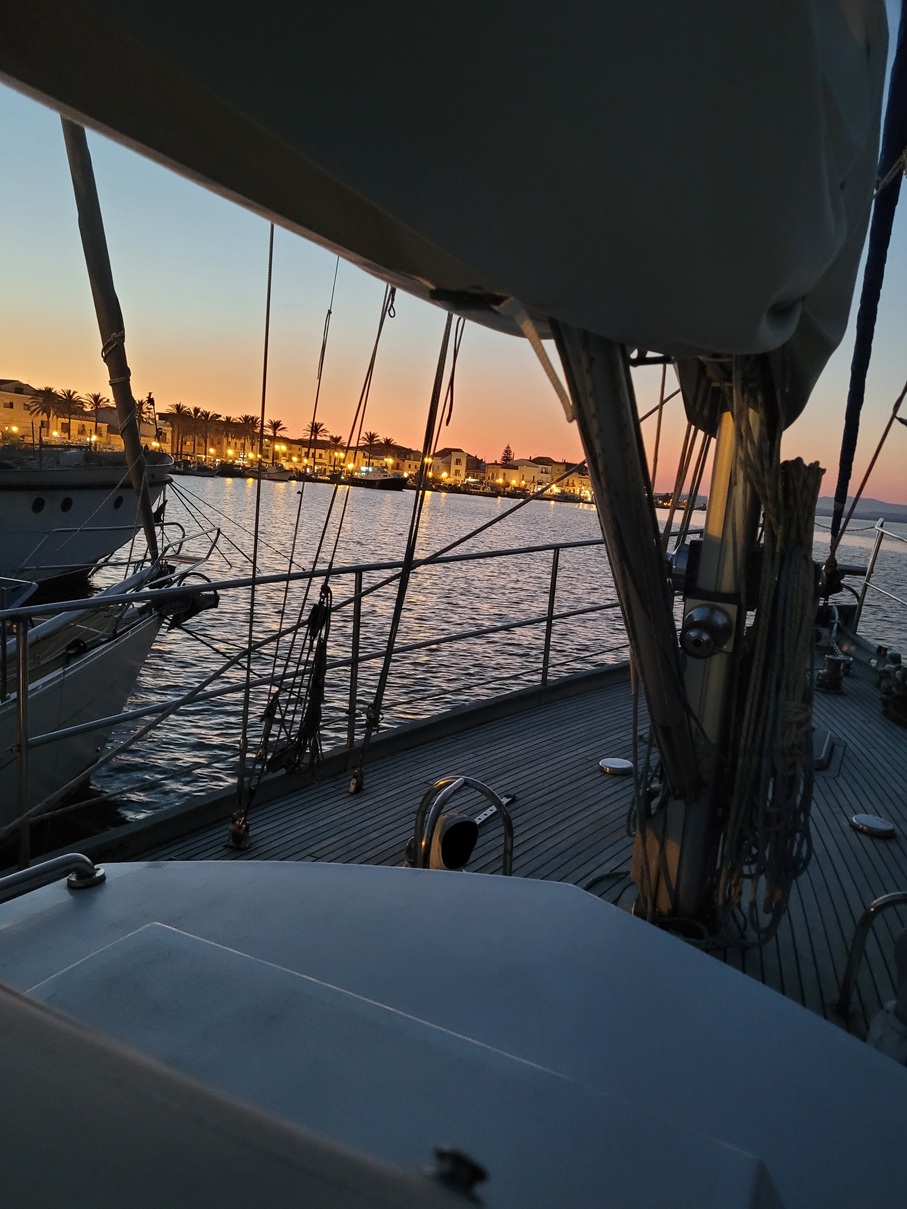
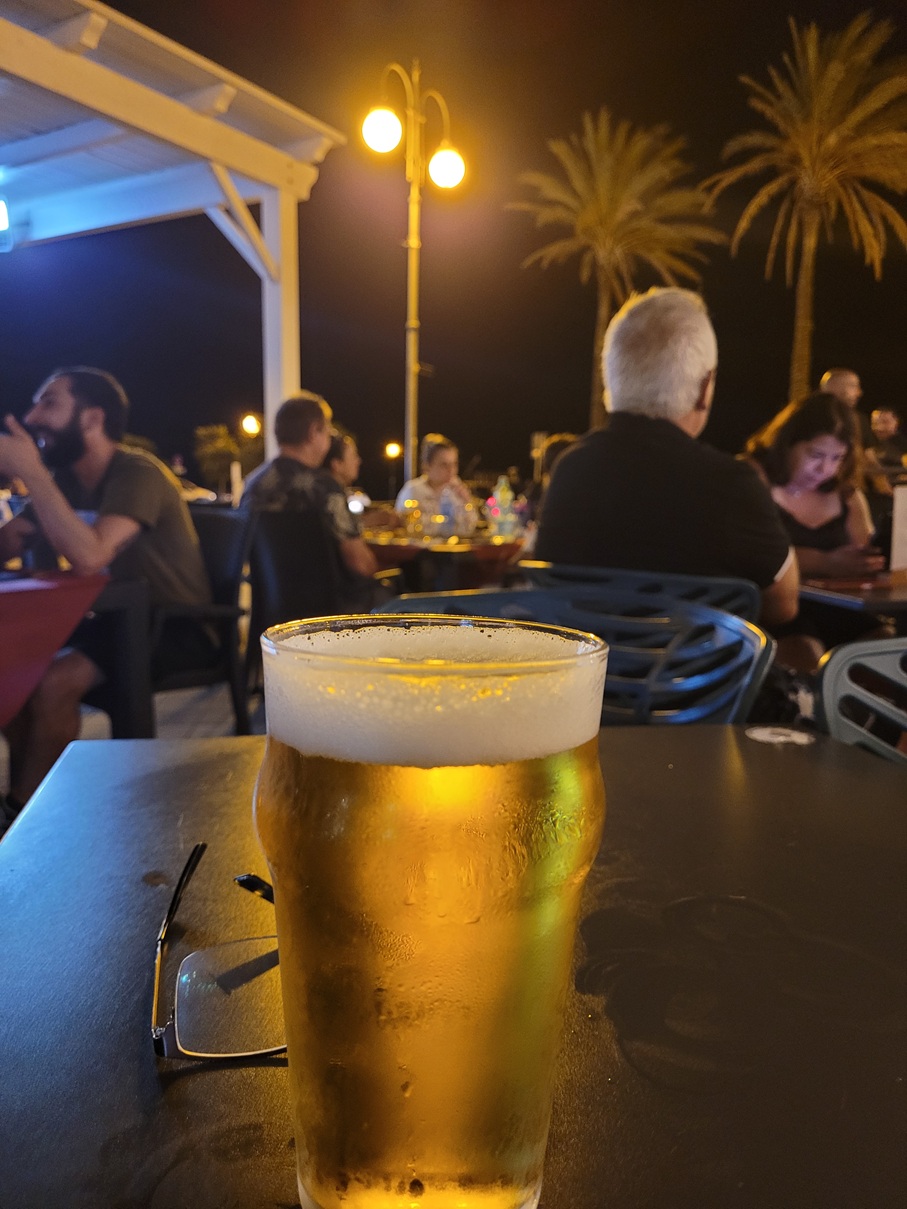
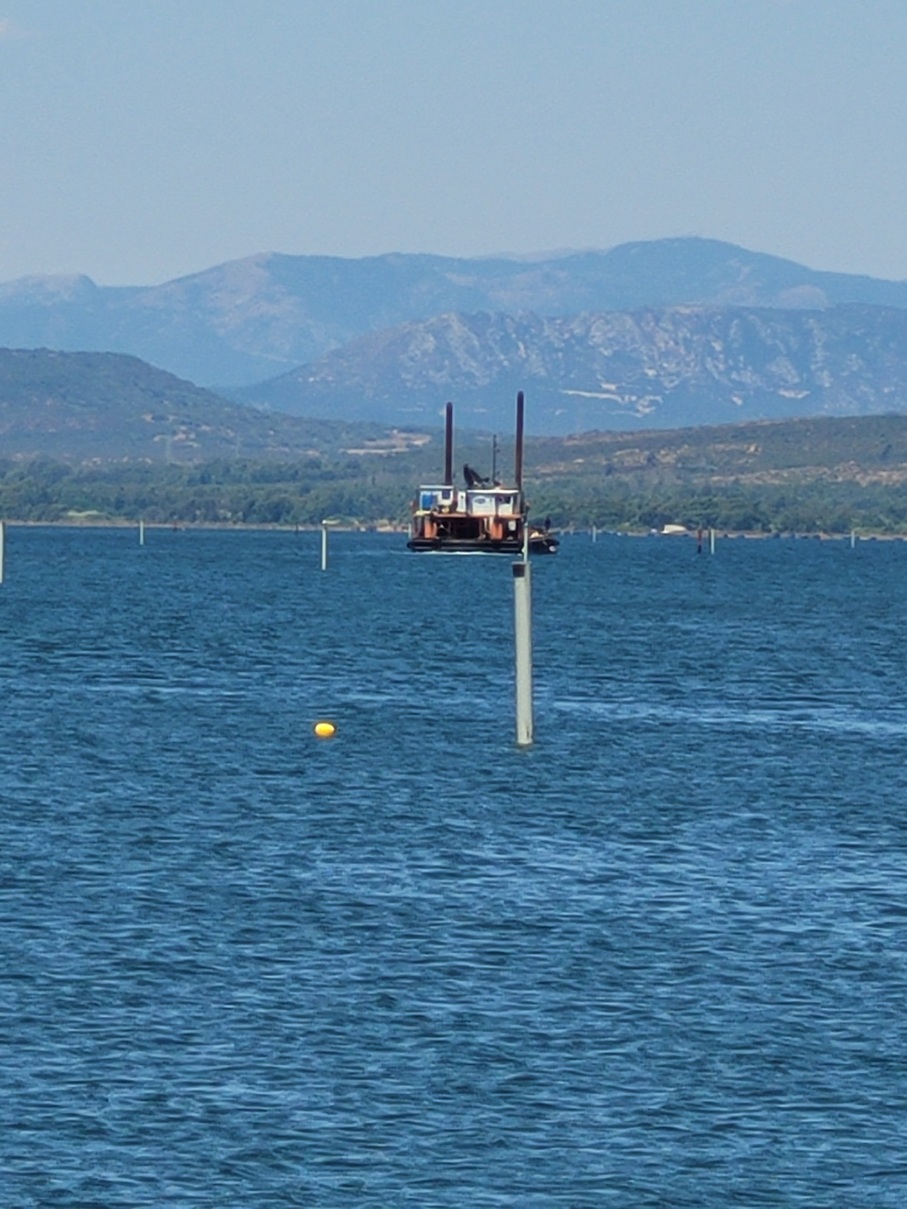
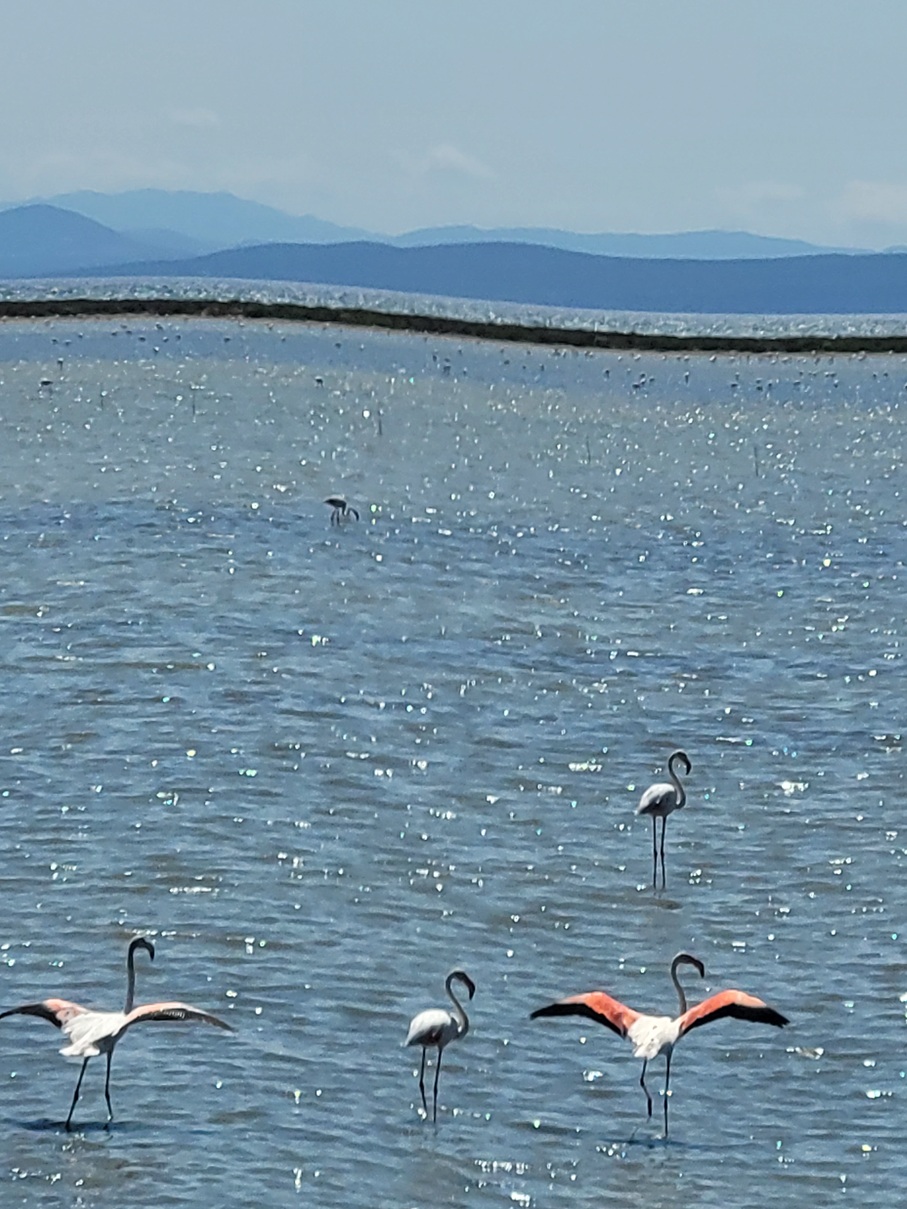
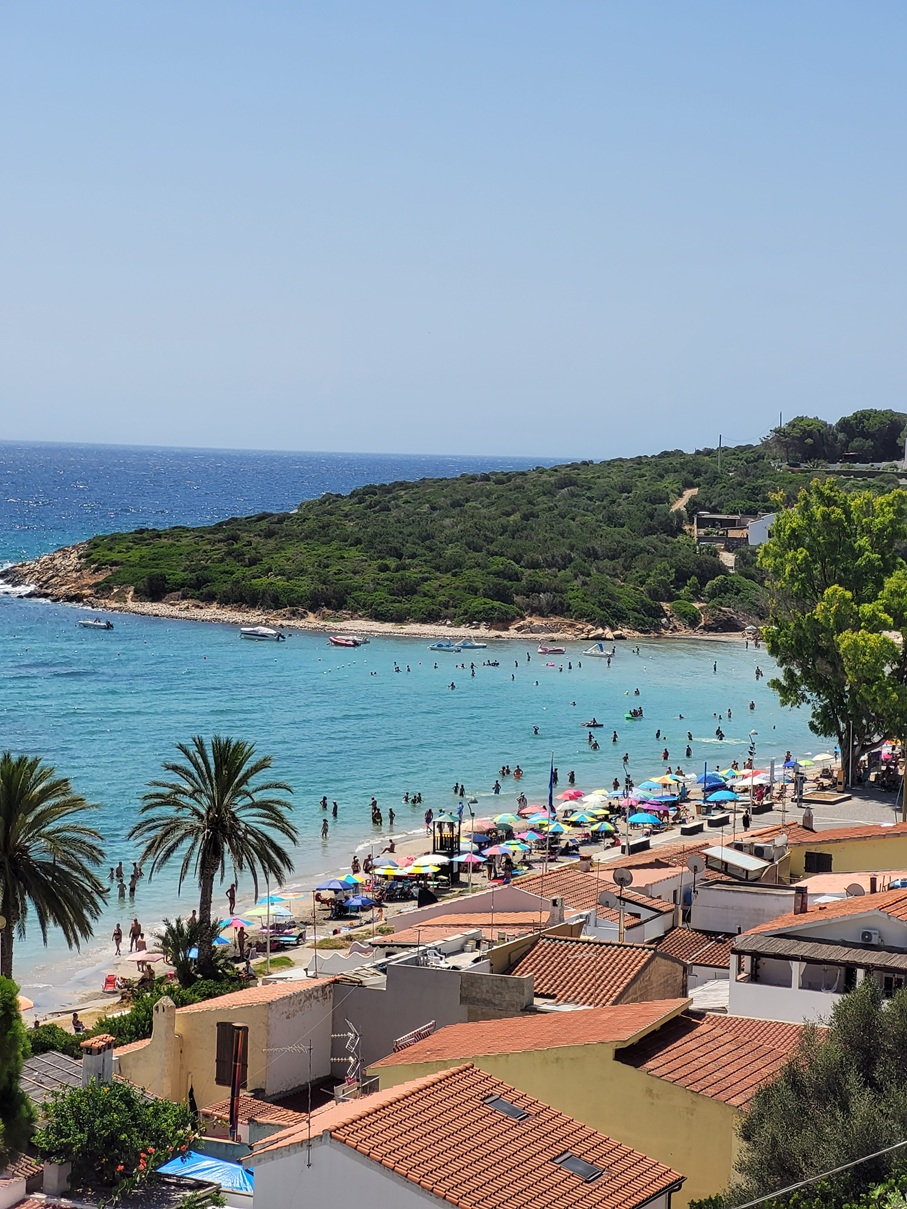
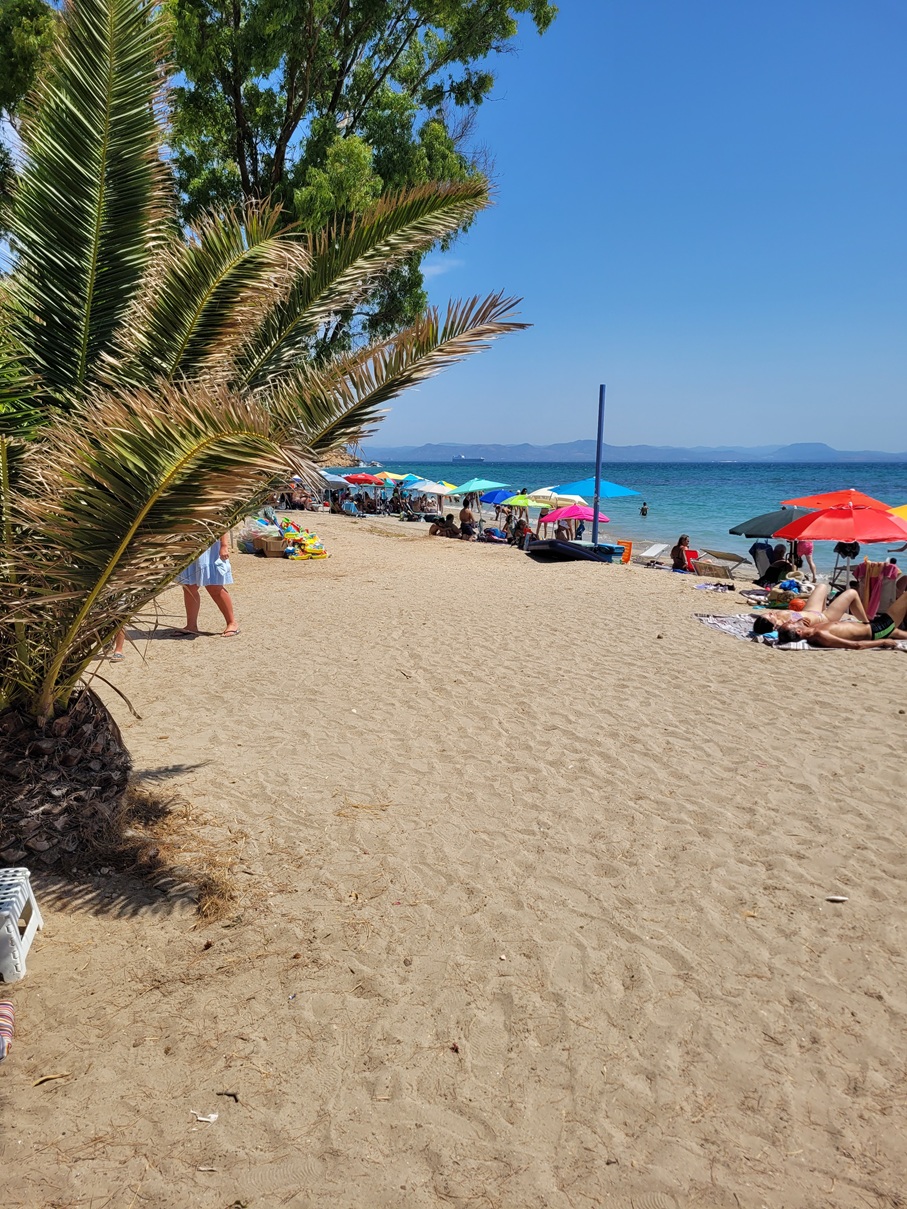
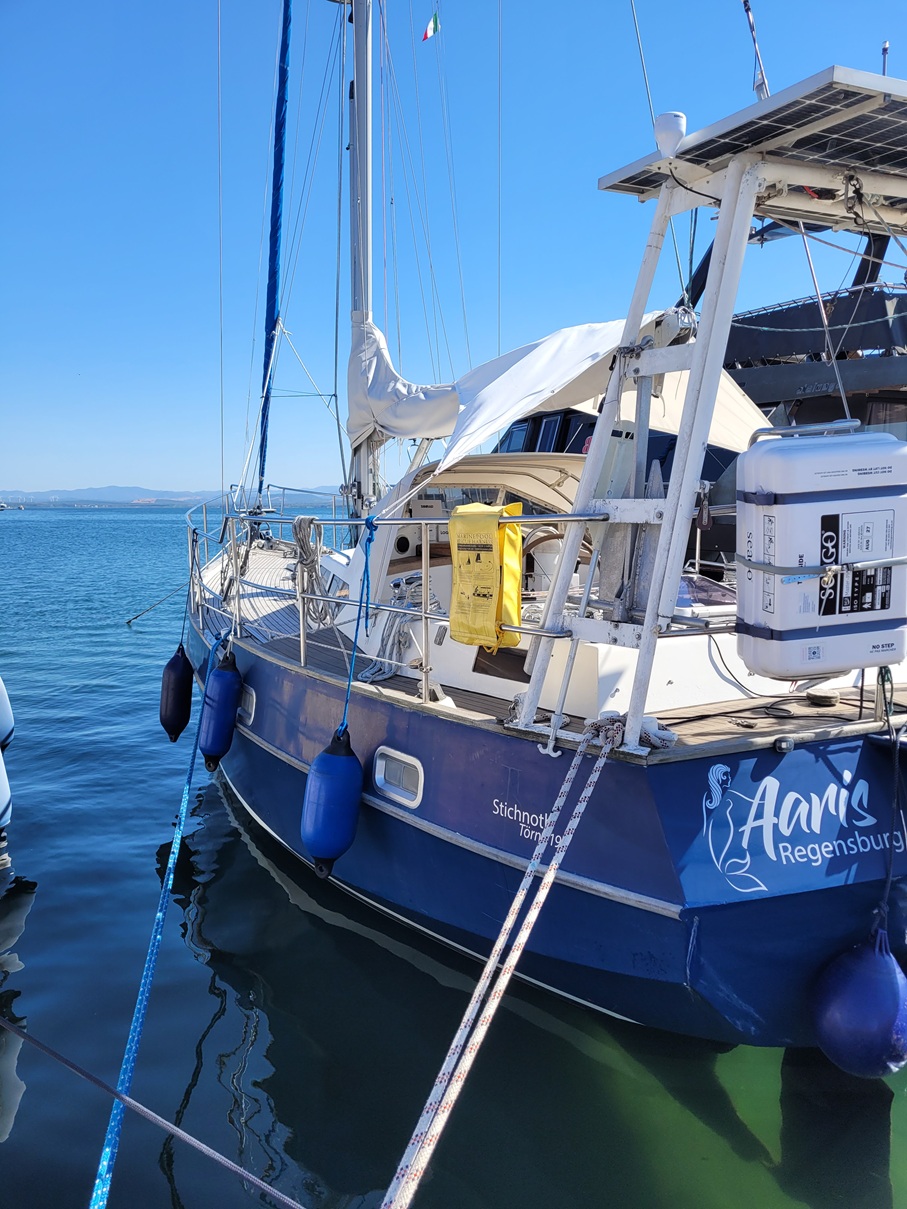
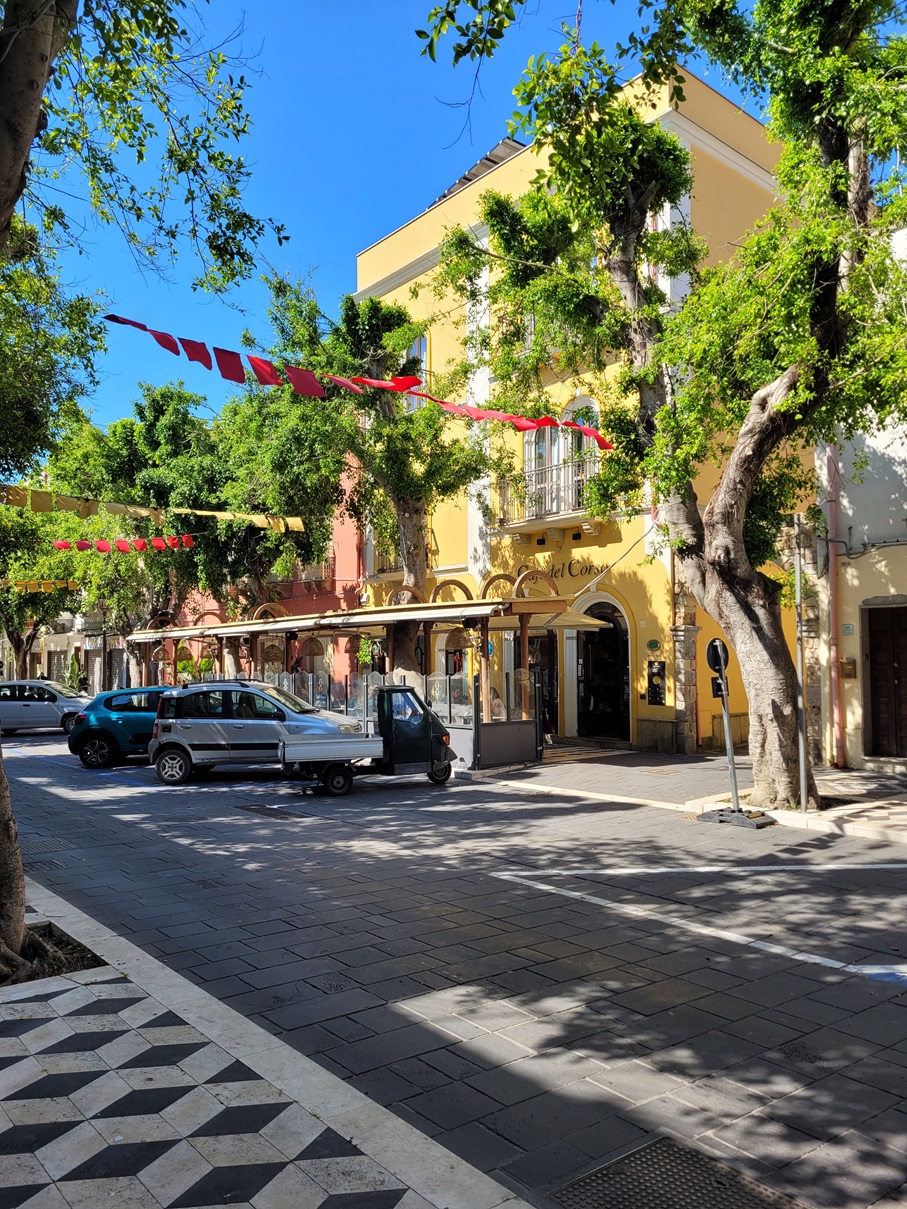
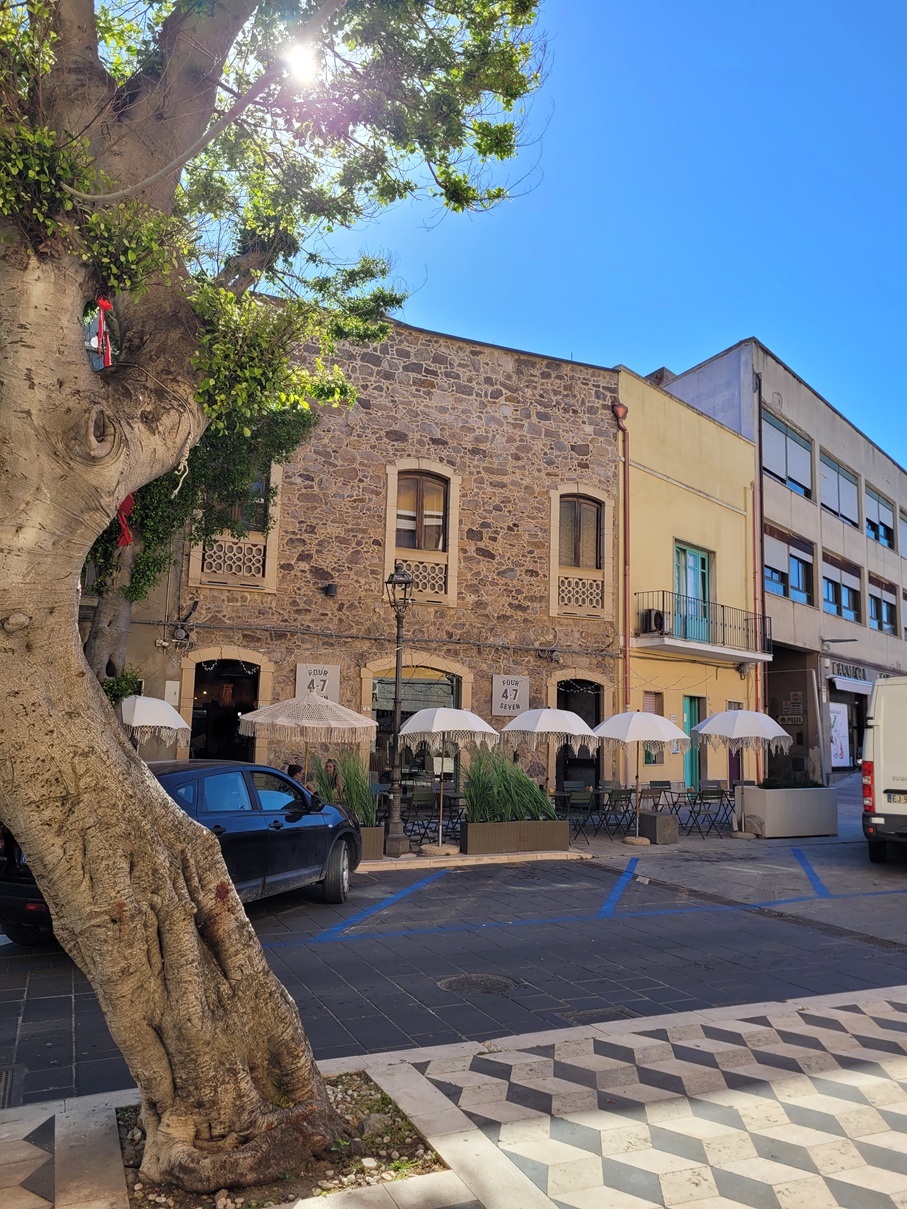
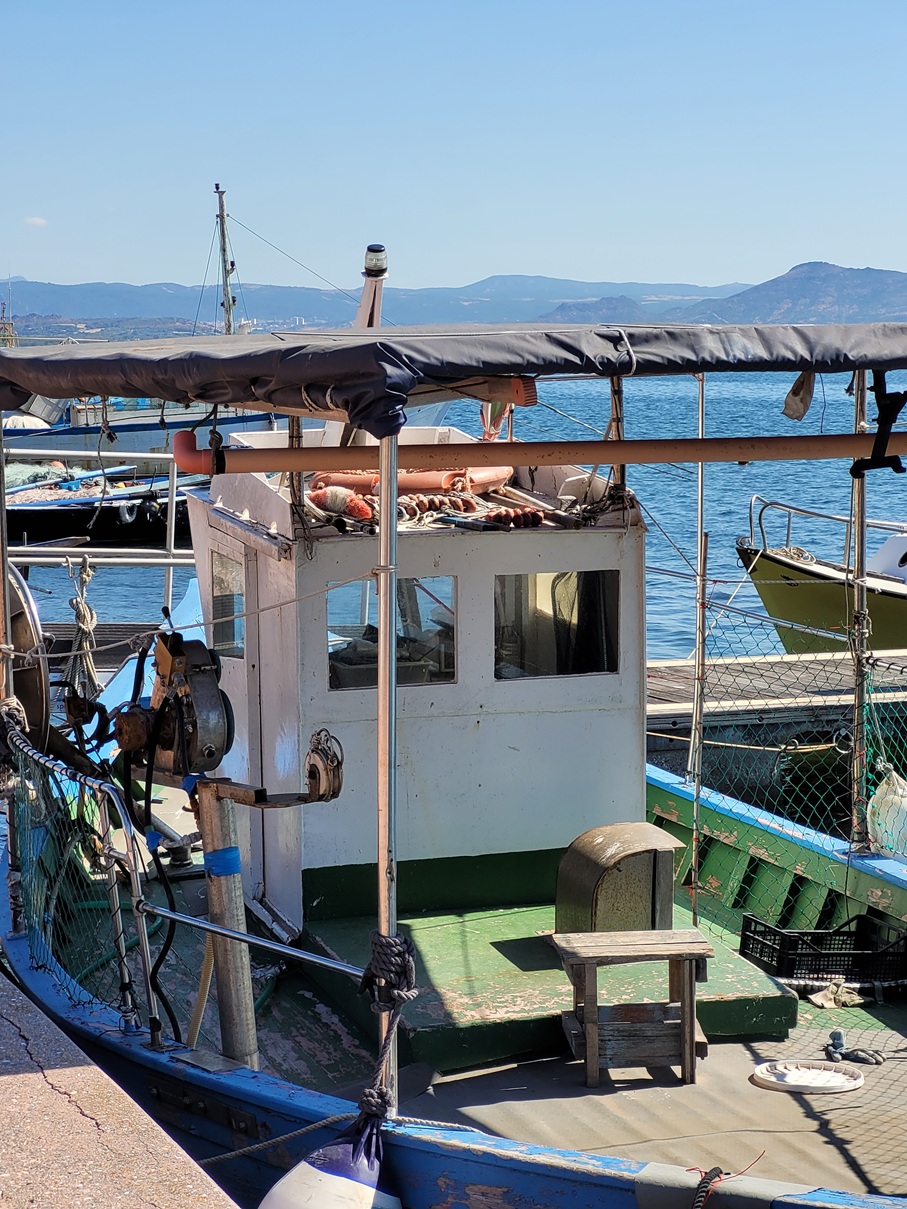
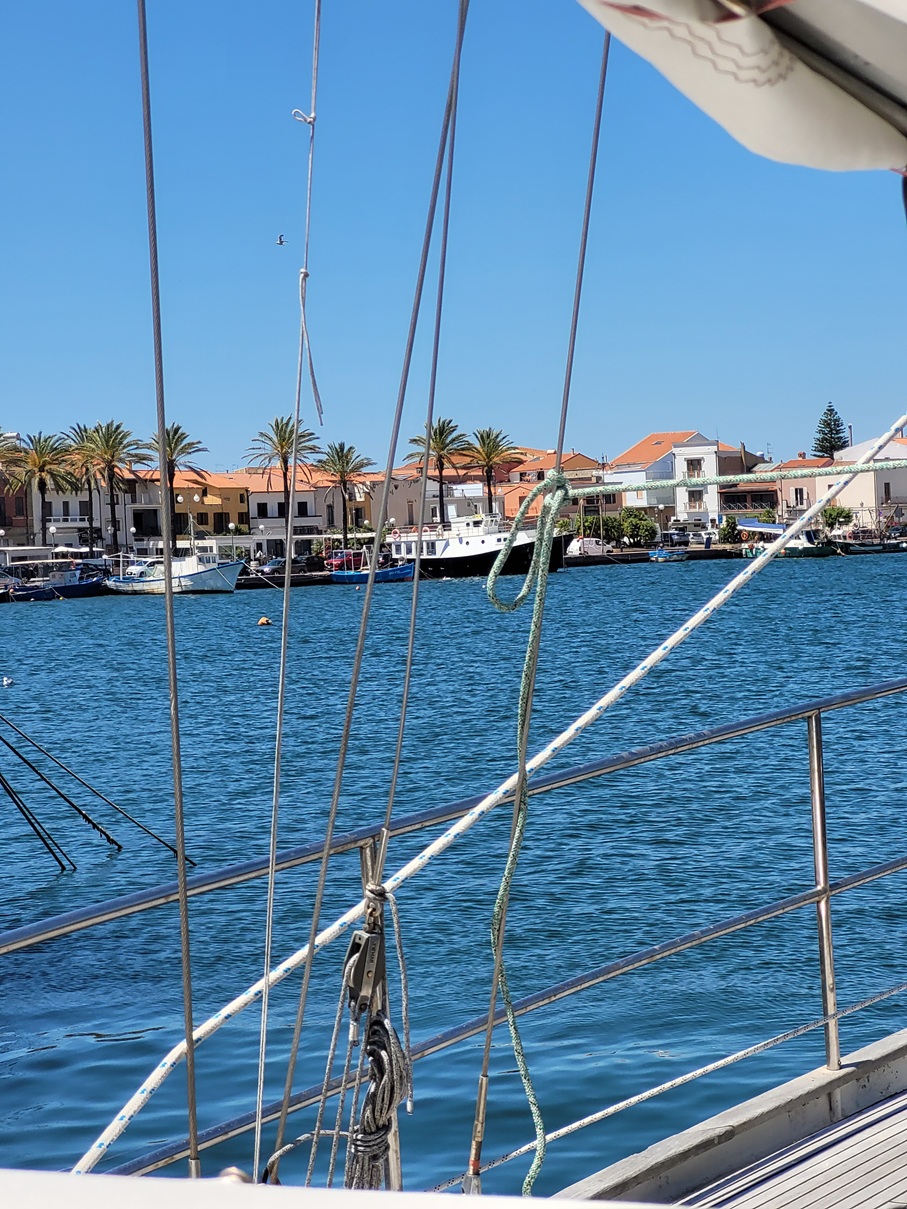
Sant'Antioco and the surrounding area
|
|
|
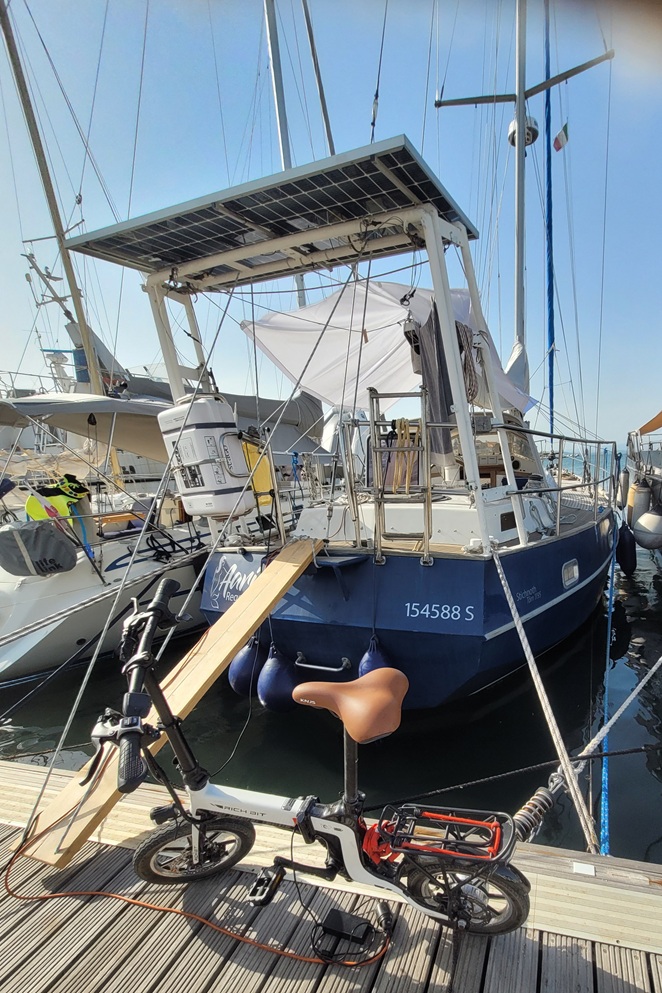
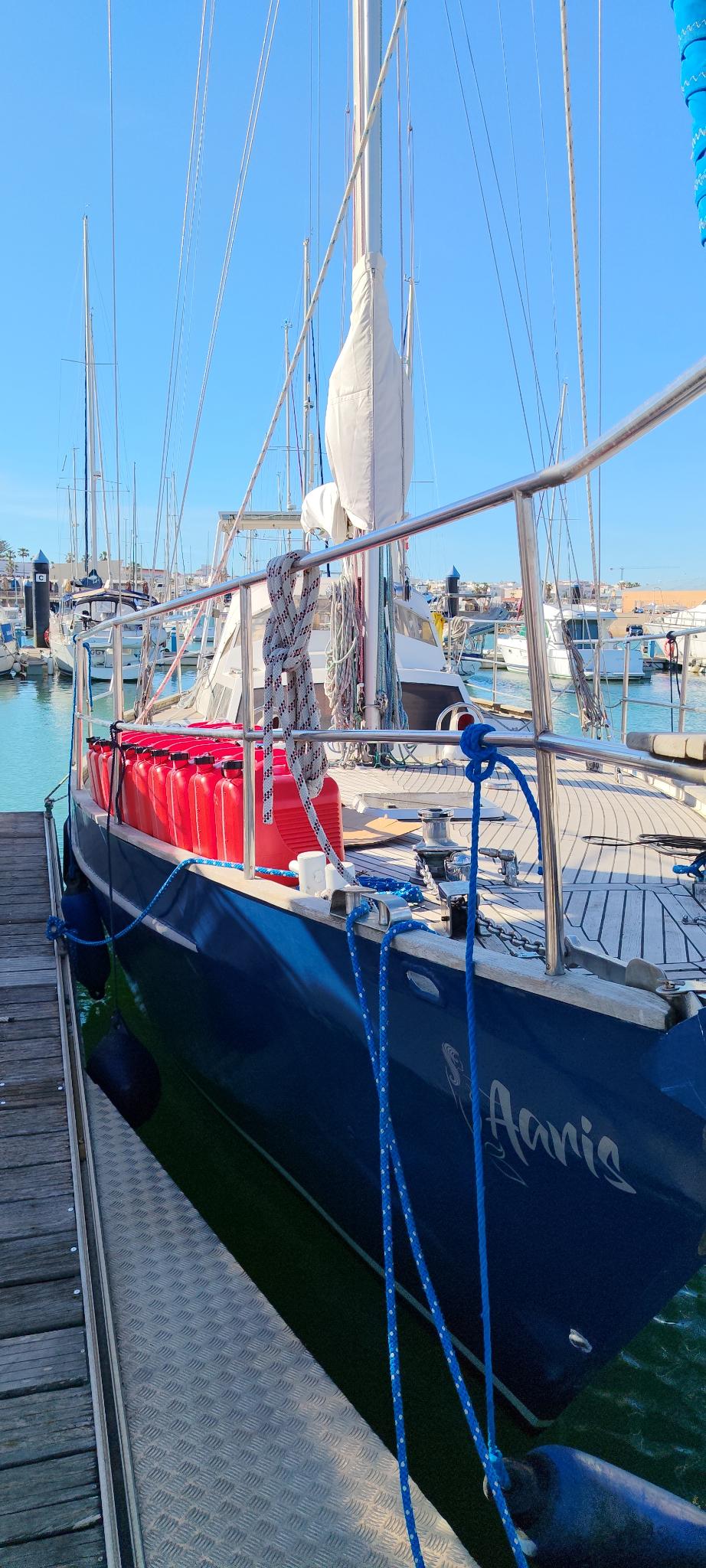
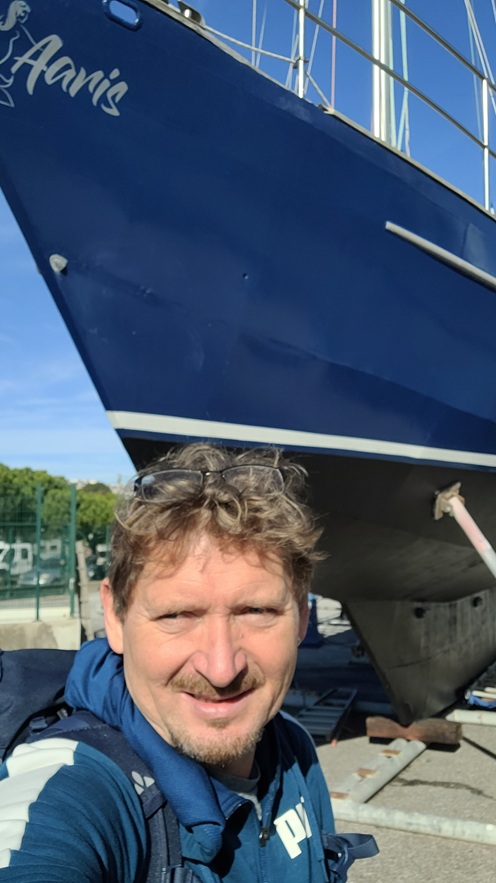
The new port for the Aaris |
|
|
|
|

|
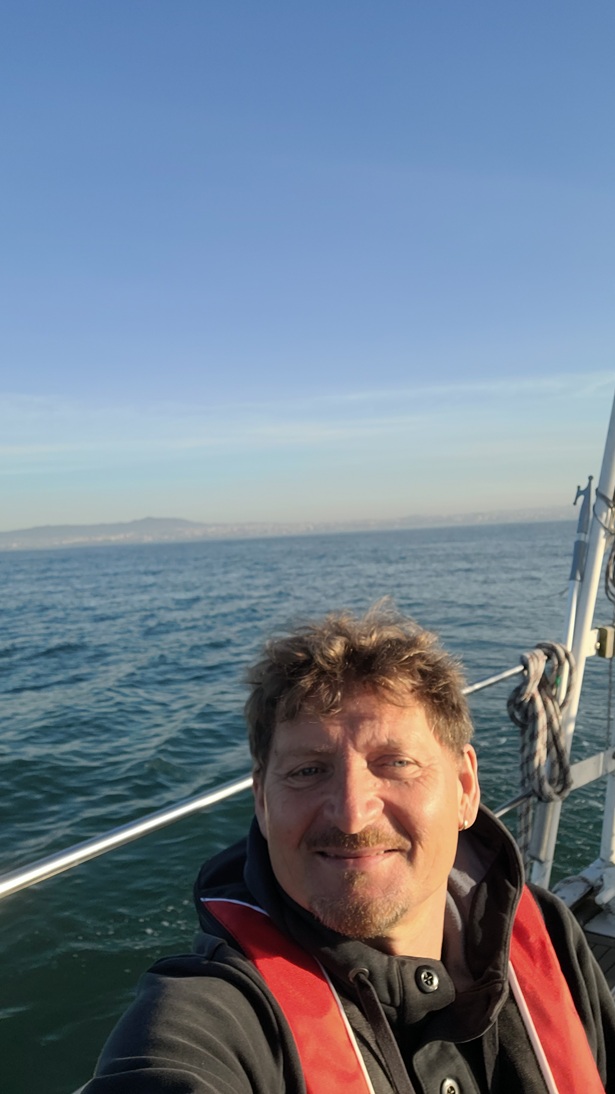
I've put a lot of thought into this trip; two years ago, I started thinking about how I might approach it.
You have ideas about what it might be like, but when you're actually on the sea, it feels completely different.
You have the ports you want to reach in your head and you've done your research, but ultimately, you can't completely plan and execute such a long trip because you're always subject to the weather.
|
Things actually started off well, with a downwind through the Bay of Lübeck, which I know so well, under the Fehmarn Bridge to Heiligenhafen.
In Heiligenhafen, we decided to sail to Kiel overnight because the next day the wind would be directly against us, with rain.
We made good progress during the night, but the rain finally caught up with us. The new spray hood immediately showed that you can stay dry in the cockpit when it's raining.
But that was the start of a less than pleasant trip; later on, through the Kiel Canal, it was windy and rainy, and from then on, my good sailing jacket became my second skin all the way until to Brittany.
Thomas, our guest from Bavaria, wanted to see the Kiel Canal; he had his bicycle with him to then cycle back to Kiel from Brunsbüttel.
Things got tough after the Brunsbüttel lock when we had to sail with current but against the wind and waves to Cuxhaven. In Cuxhaven, I saw a seal up close for the first time, for me as a Bavarian this was very exiting.
It was resting on the jetty and looking at me as if I had dinner for it. From Cuxhaven, however, we were able to sail beautifully all the way to the East Frisian Islands, but then the wind shifted,
waves started to build, and we decided to head for Borkum. Borkum seemed a bit unreal to me, too, with the mudflats just 200 meters from the shipping lane. At sunrise, a seal greeted us on the stern.
Sailing was beautiful again all the way to Terschelling, the West Frisian islands, but then a powerful wind and waves came up, and we had to tack.
As the waves grew ever larger, we needed the engine to tack; later, we sailed with sail and engine, which wasn't a pleasant night sail. Our destination was Den Helder.
A seal greeted us in front of a huge harbor with many warships, but we were lucky; the sun was shining, and our mood immediately lightened, and I remembered why I wanted to head south.
From Den Helder to Zeebrugge, another seal said goodbye to us; in total calm, the Benz had to push us through the calm. During the night, we passed Rotterdam in heavy traffic, but then we were able to sail to Zeebrugge.
Once there, Sepp and I treated ourselves to a break and went for a meal and a beer; it was a lovely celebration in the harbor. I said goodbye to Sepp and a day later, I greeted my new crew member Stefan, my dock neighbor from Lübeck.
The new leg of the route began. |
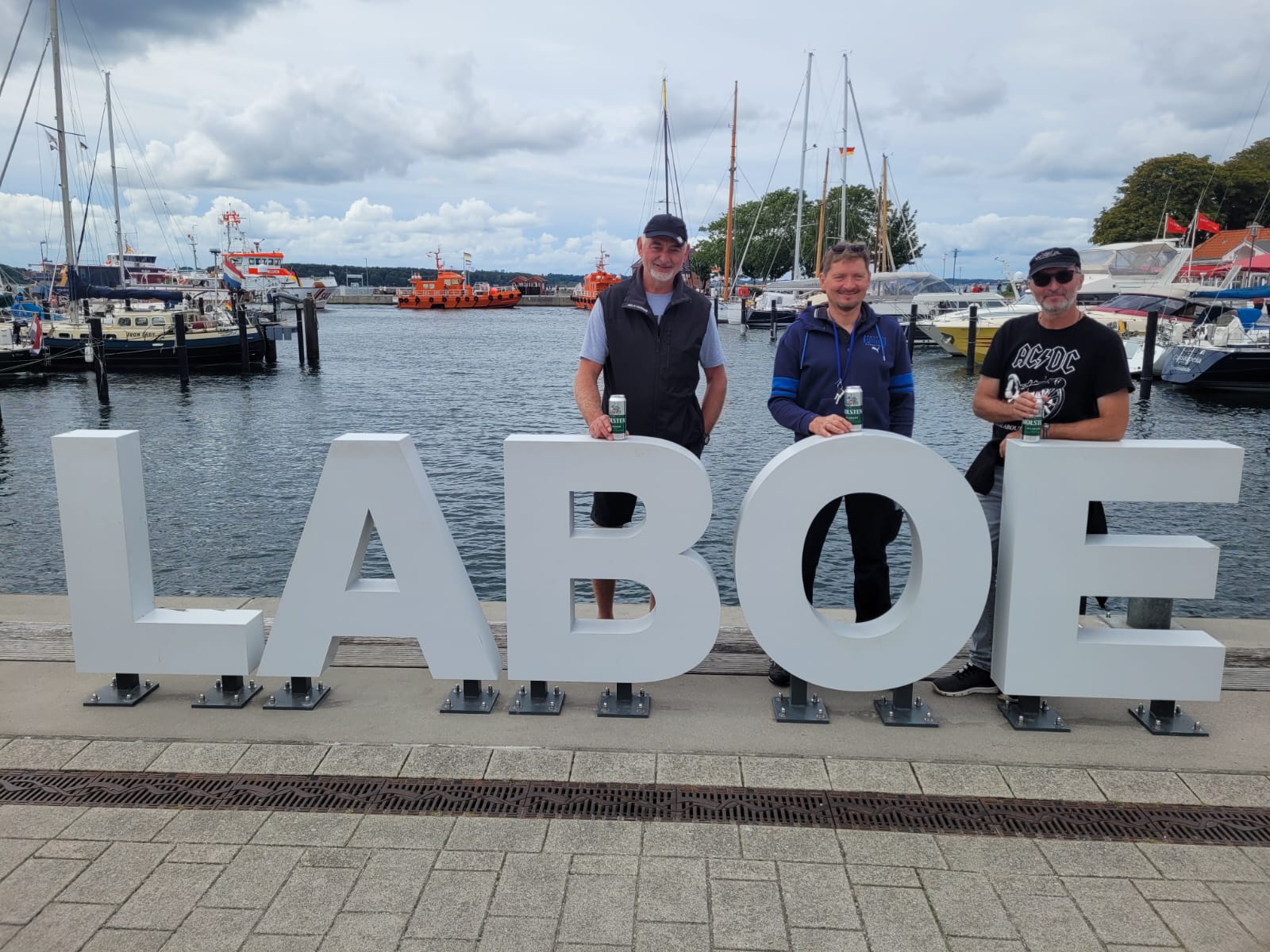
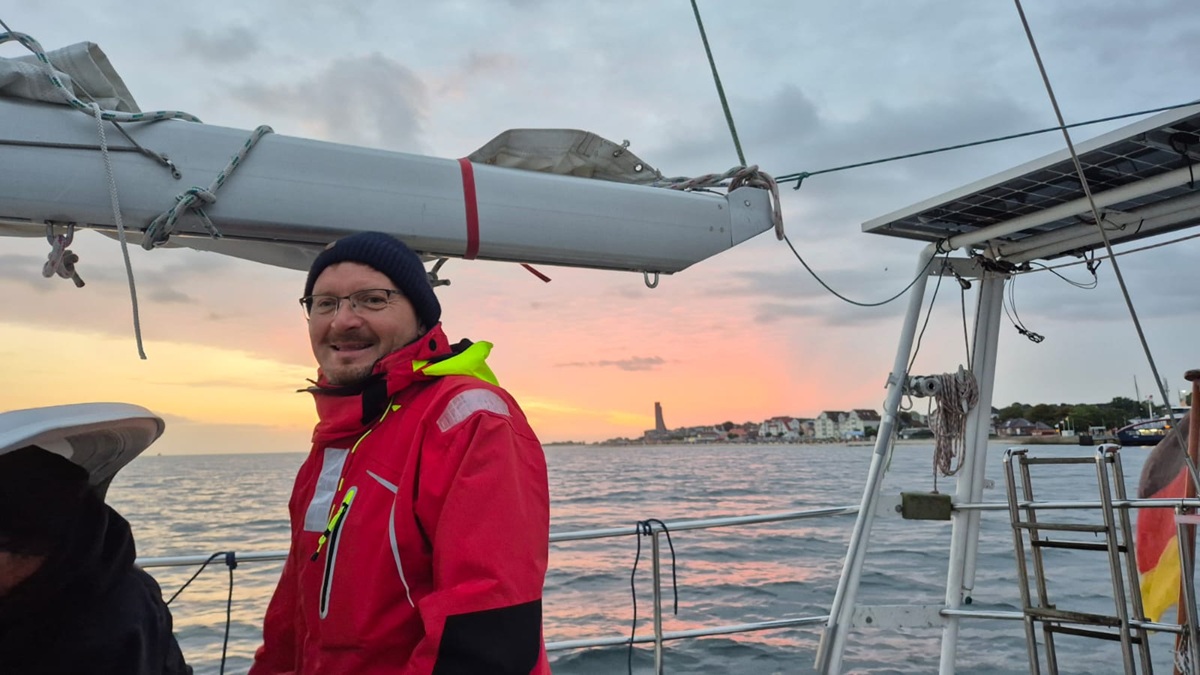
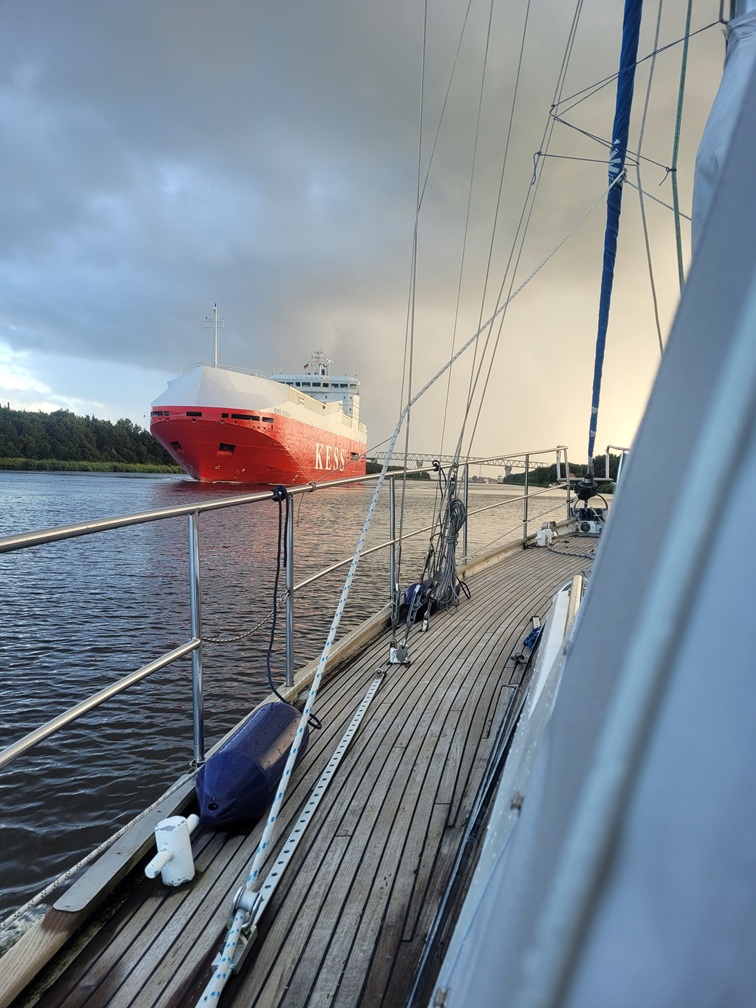
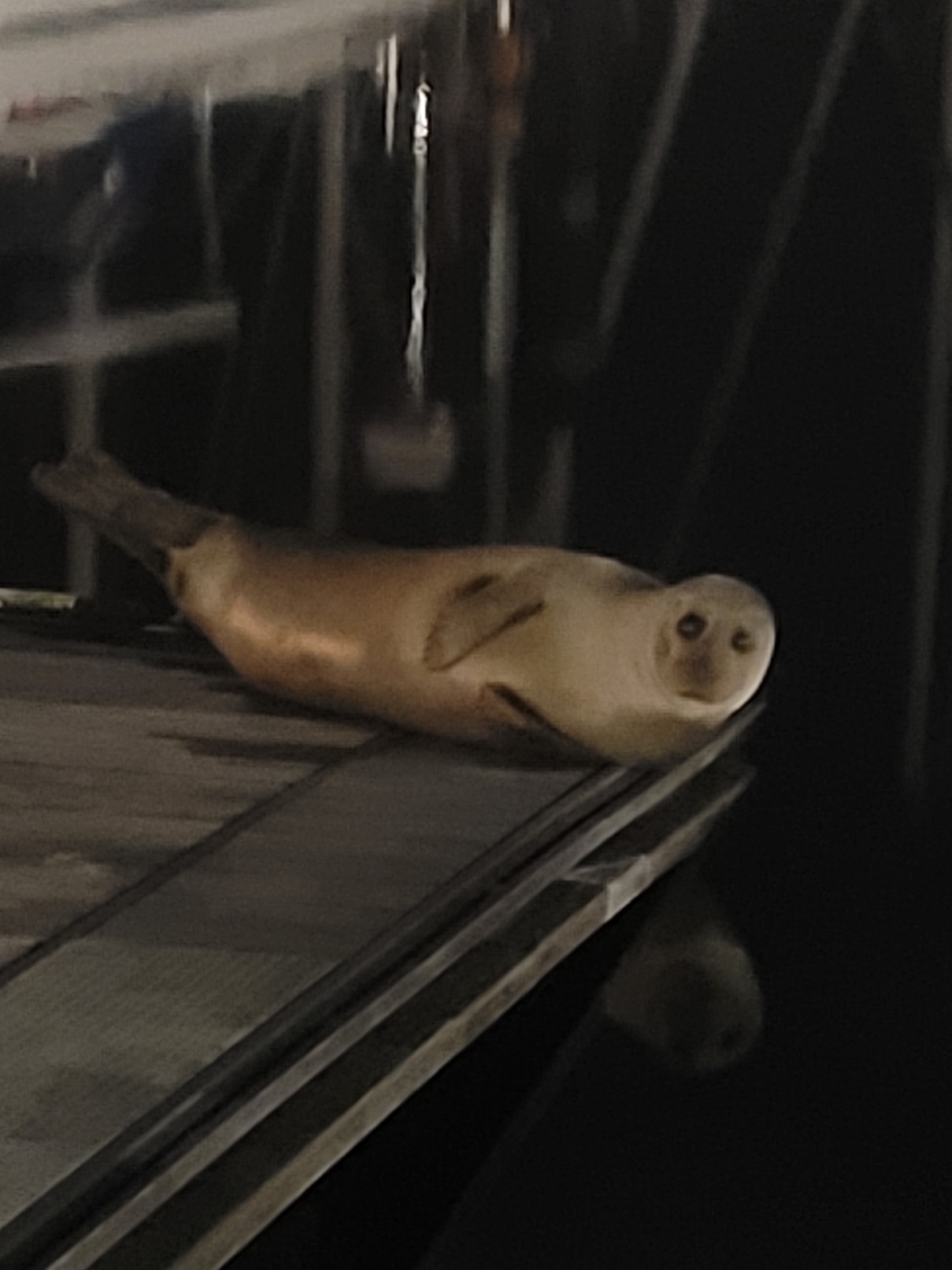
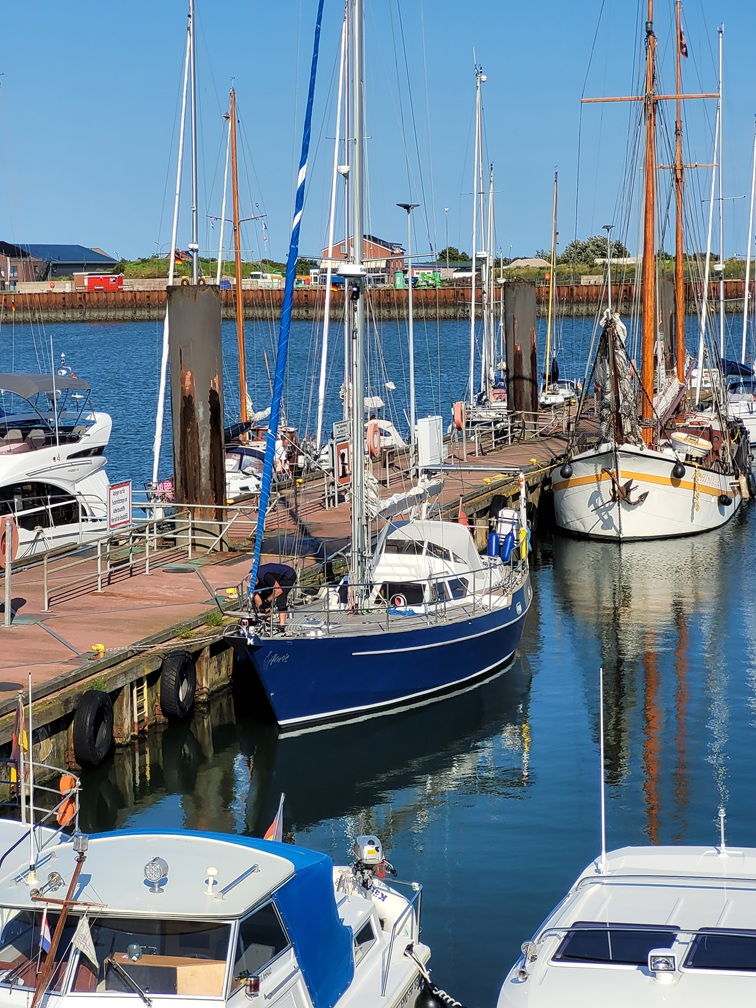
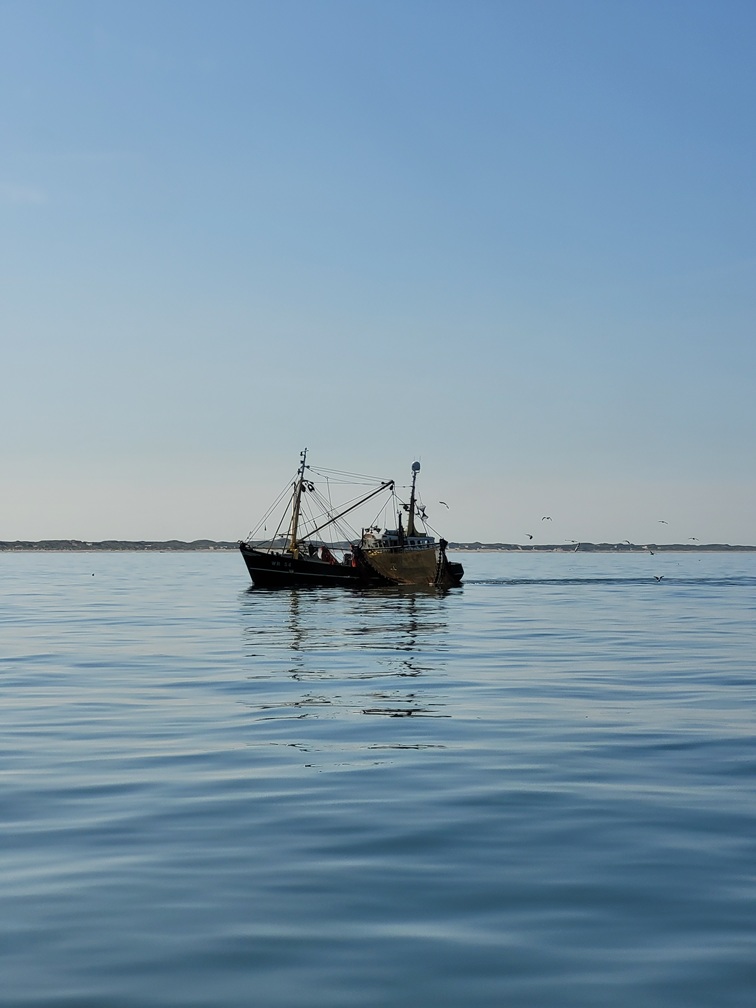
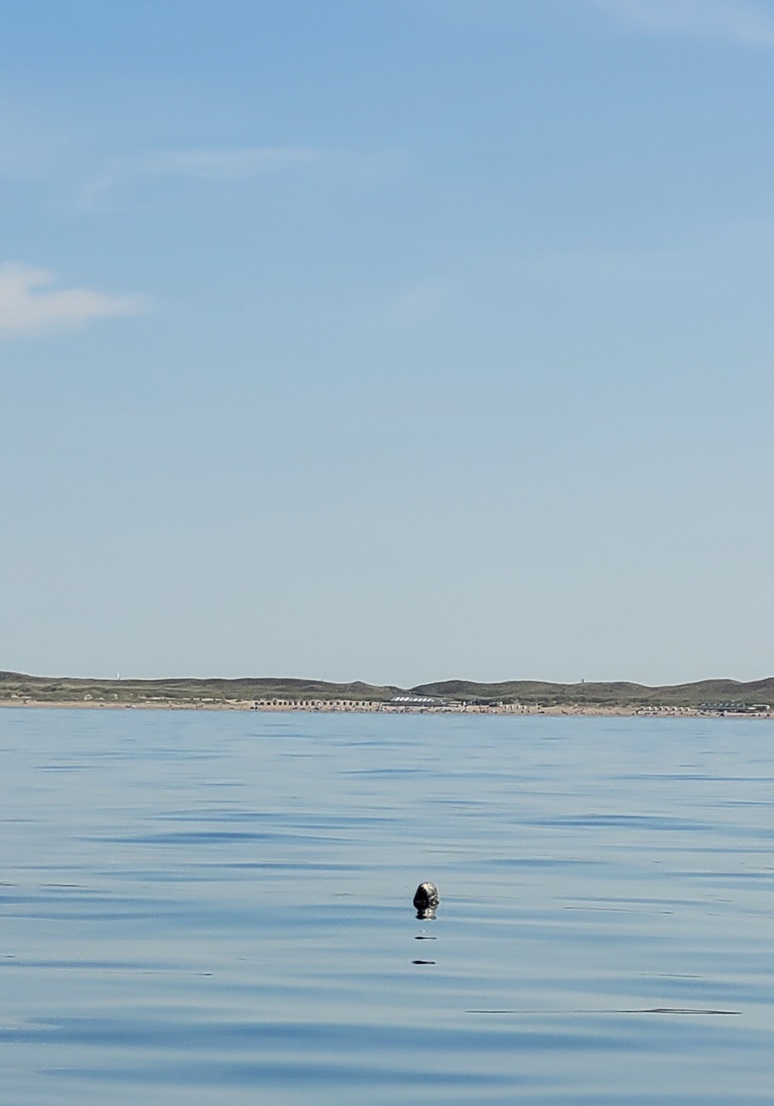
Crew for the Kiel Canal | Kiel in the sunrise | Kiel Canal | Seal on the jetty | Harbour Borkum | Crab fishing | Seal says good bye |
| We left Zeebrugge in the evening because of the current and tried to stay closer to the coast to avoid the commercial shipping. We were sailing well, reaching Calais at dawn, and I tried to navigate between the ferries traveling between England and France. We were supposed to arrive in the evening when we received a radio message saying that a wind farm was going to be built there. We couldn't see anything yet, but we still had to make a long detour, and patrol boats were checking it very closely. The wind gusted up and a wave built up. As we approached the harbor, it was pitch black, and a powerful current ran across the entrance. We were happy to be able to lower the sails in the outer harbor and then find a berth in the city harbor in the dark. We heard live music, but since we came in at low tide, we couldn't look up because the harbor wall was at least 8m high. These currents and these tides, when you see them like that, are quite impressive in the English Channel. When we came up, people were dancing in the street... aha, so this is France. We even got something to eat at 11:30 p.m. We really liked Dieppe. After Cherbourg, we didn't arrive until nightfall. Cherbourg is also a beautiful town, but we didn't like the marina so much. Boats that only stay one night are given a dock near the entrance, which has a lot of swell, and it was also very rough that night. Then we spent an hour that evening discussing and studying the maps about how we would navigate the famous Alderney Race the next day. There are currents of up to 7 knots past the Cape de La Hague (nuclear fuel reprocessing plant). If we arrive there at the wrong time, we'll go backwards. We wanted to go to Guernsey and wanted to have the current with us, and this worked out exactly as we had planned. Guernsey is truly "very British"; you immediately feel like you're in England. I wouldn't have been able to sail here on my own, but Stefan is a great sailor. We had to be there at the right time to ensure there was enough water to get into the harbor. There's a bar in front of the harbor that keeps the water level in the harbor constant, so I had to be there to be able to clear the bar with my keel and 1.90m draft. Before we left, a woman arrived in a dinghy and gave us a form to enter England. A little later, another woman arrived, also with a very British accent, and then collected 56 pounds. So, entering England wasn't that difficult. The island and the pubs are definitely worth a visit. The next day, we wanted to Roscoff, we had a calm again in the morning and we needed the Daimler-Benz again. There was a bit of wind in the afternoon, but the current was strong. With the current, we were traveling at over 6 knots, and against the current at 2 to 2.5 knots. Once again, we arrived in Roscoff at low tide in the night, and this time the harbor walls were 11 meters high. We went to sleep, and when I woke up and looked out, we were level with the quay, 11 mm higher. |
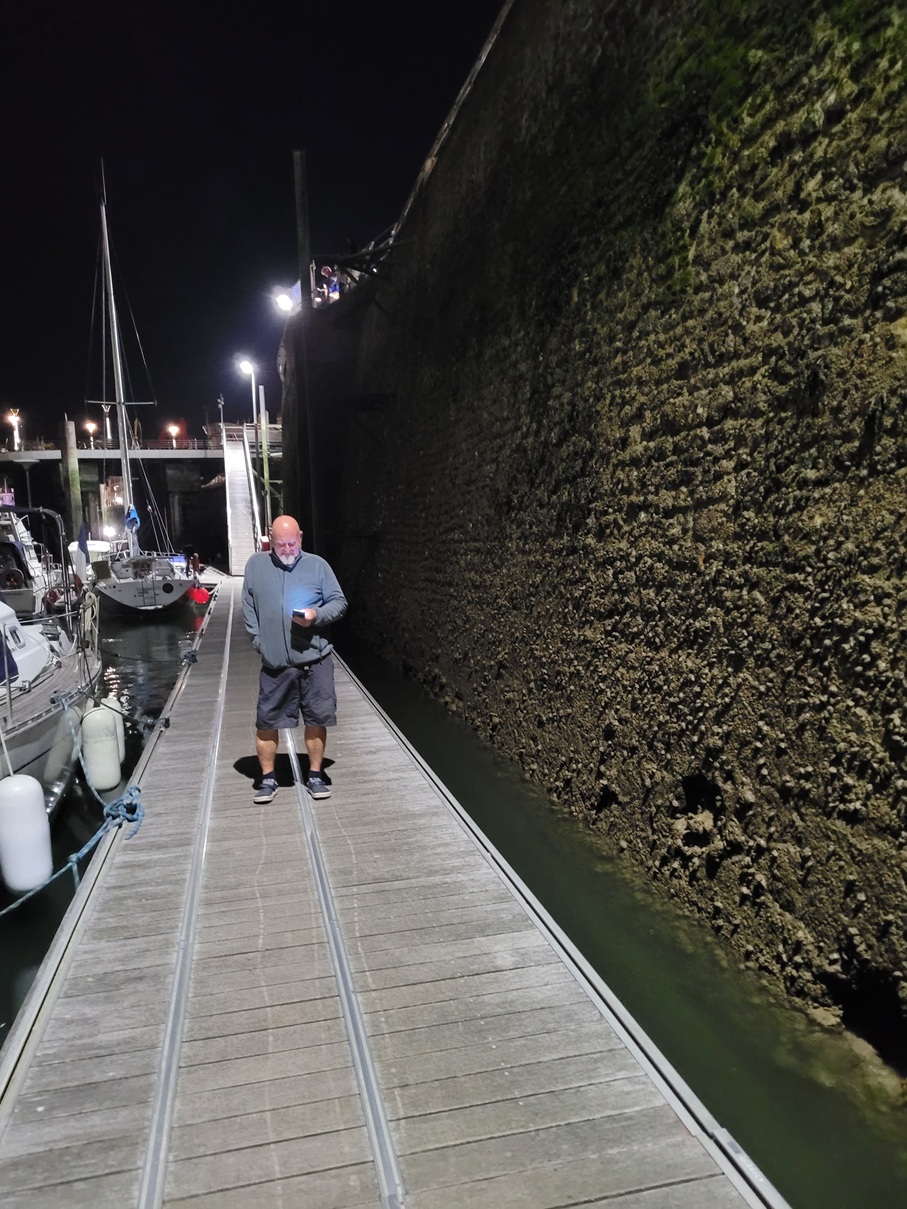
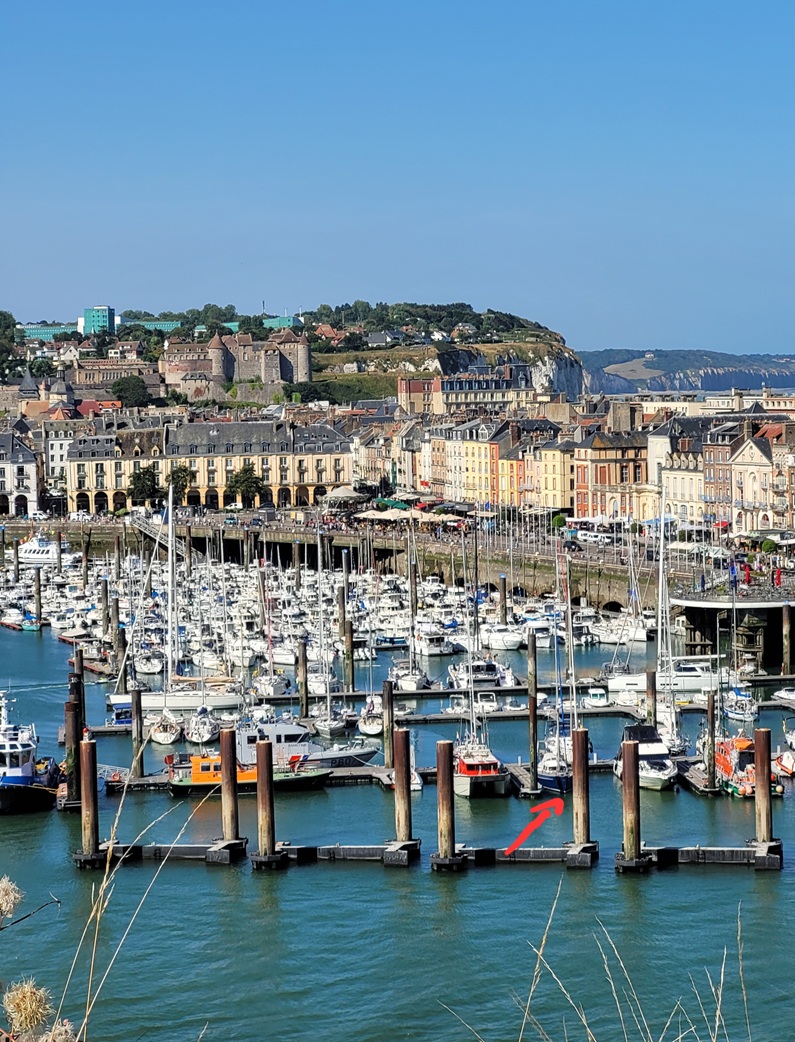
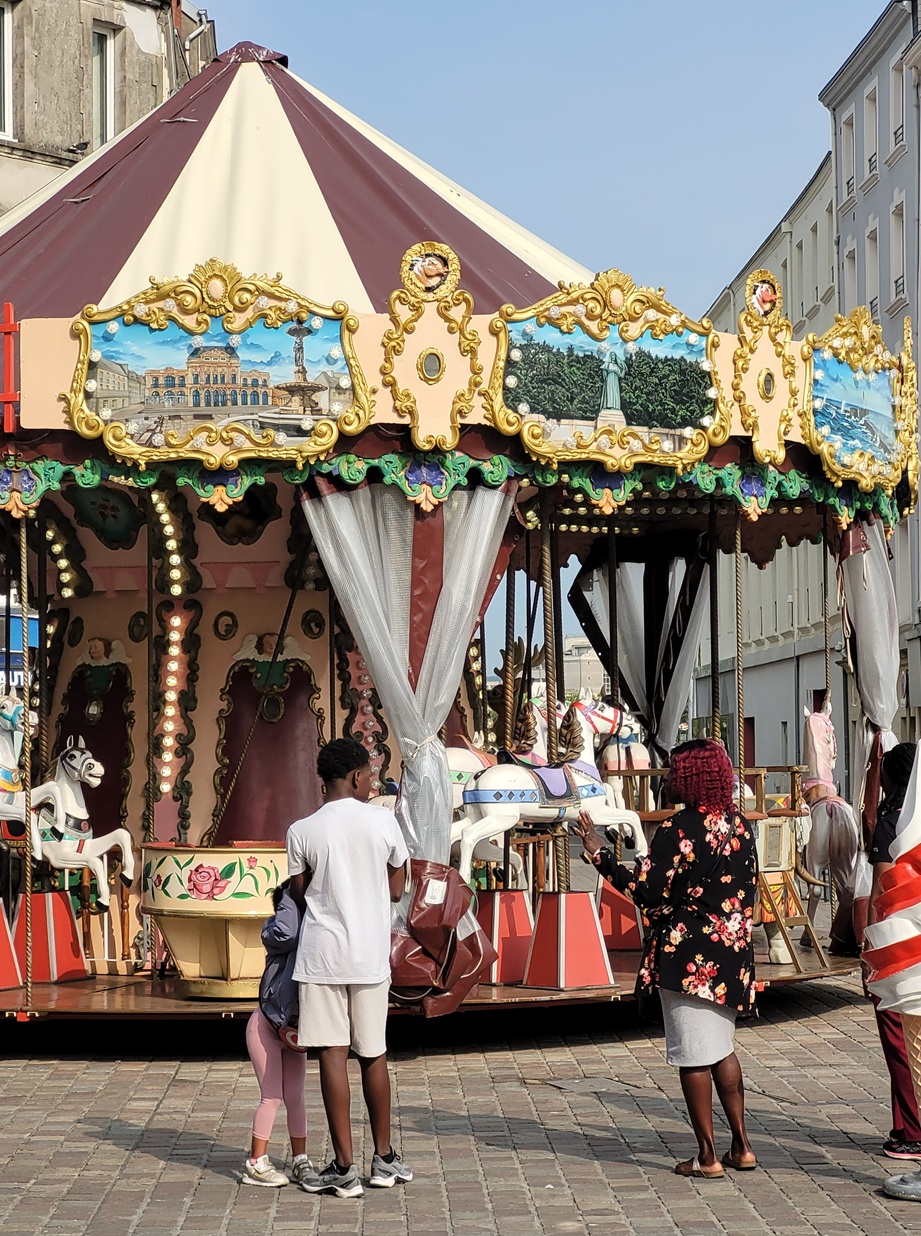
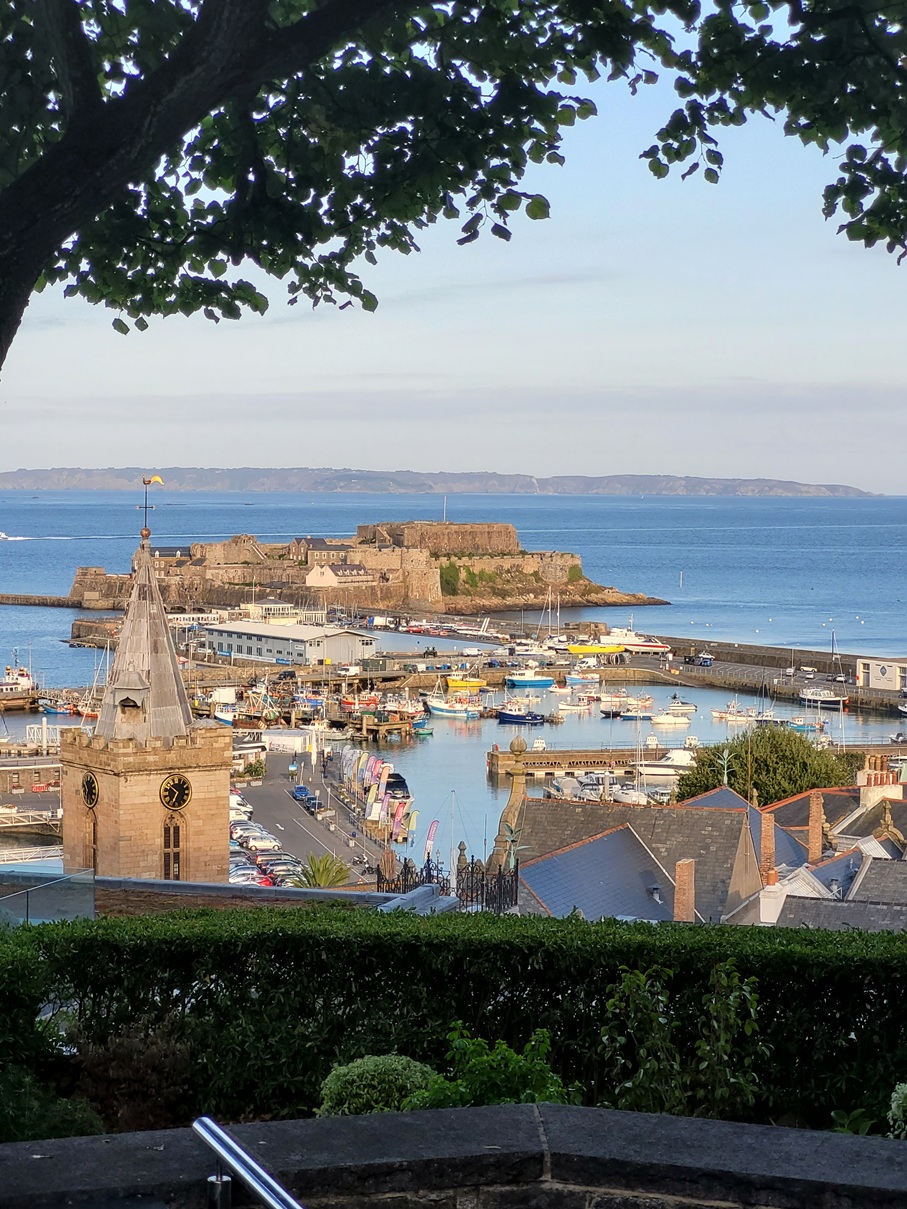
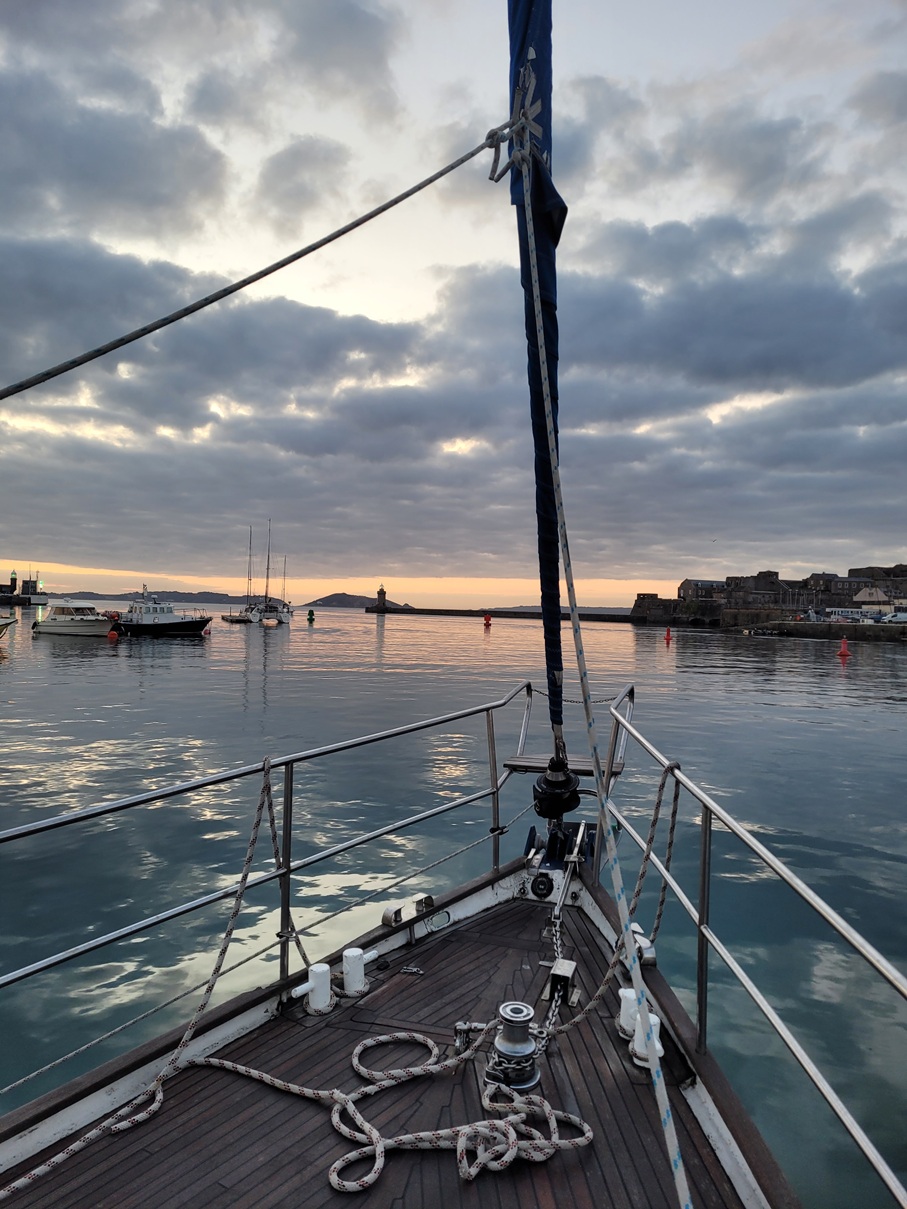
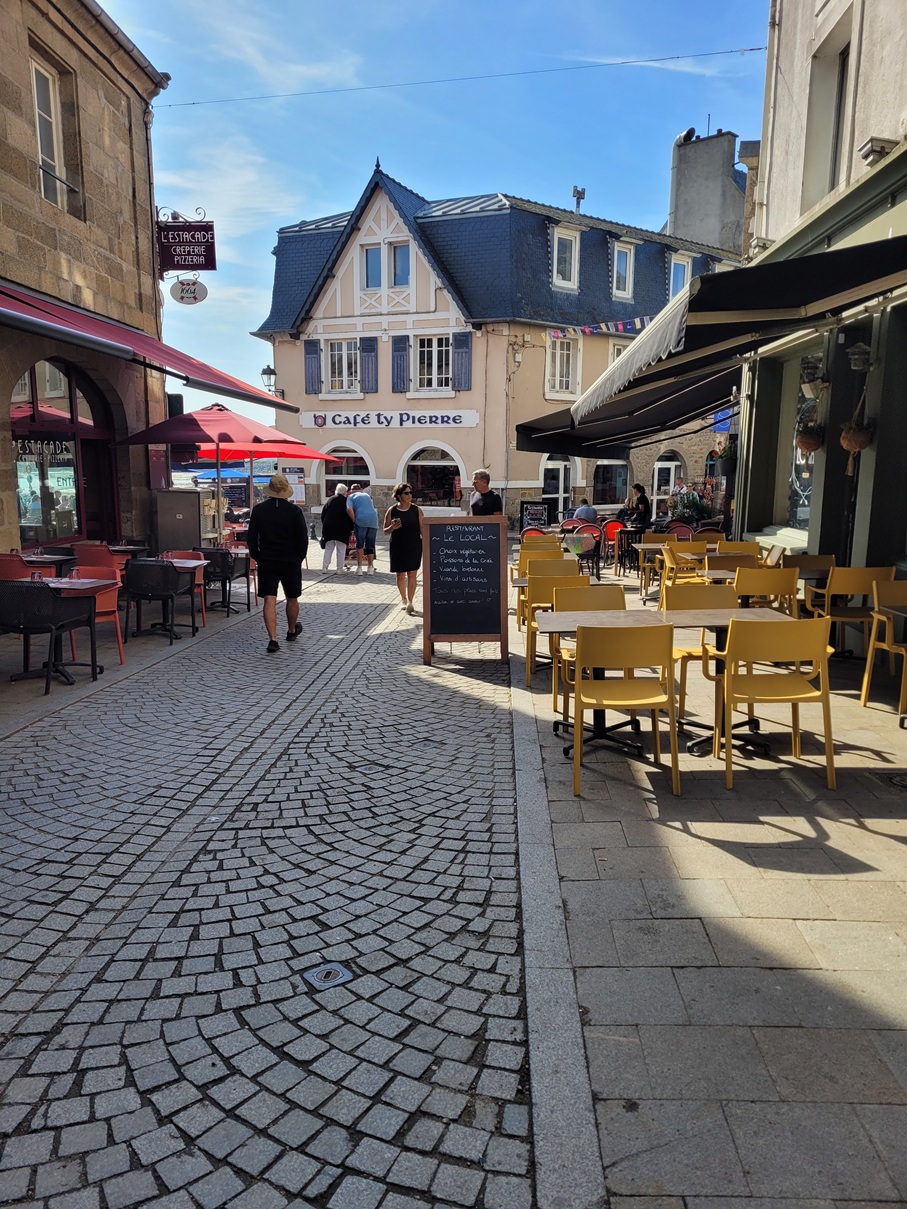
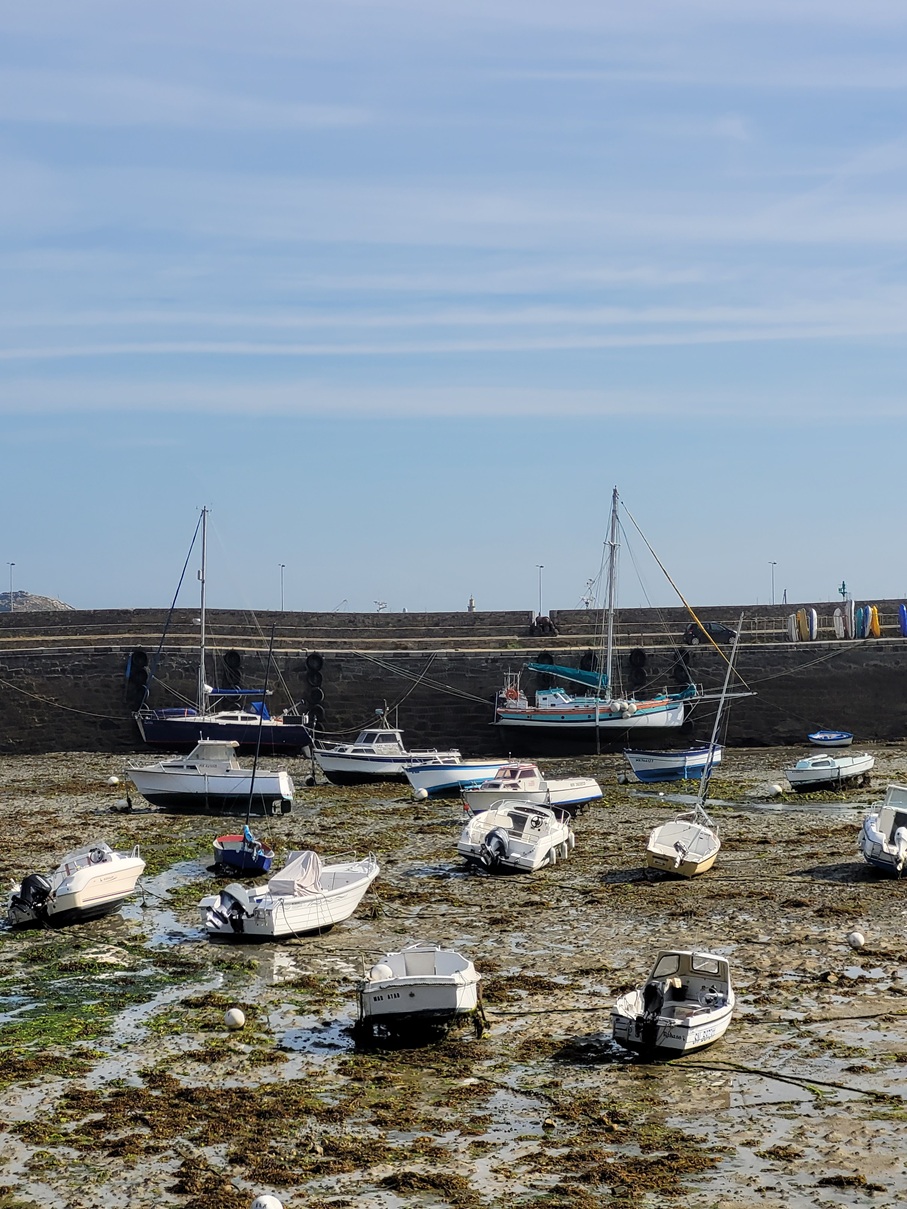
Dieppe harbor wall - really high | Dieppe | Cherbourg city center | Guernsey | Leave of Guernsey harbor in the morning| Roscoff | Roscoff city harbor |
| We discussed it for a long time in the evening, as there is a weather window from Sunday to Thursday that allows for good conditions to cross the Bay of Biscay. So we decided not to go to Brest at all, but to go straight from Roscoff to the Bay of Biscay. Unfortunately, when we left Roscoff, the wind died down and we had to use the Benz again. When we crossed into the Bay of Biscay, we had to fight strong currents (Brest and Porthmouth) one last time. The further out we went, the more routine we got; we went to sleep when we were tired. The waves got higher and higher, but they were also up to 1 km long. These were the remnants of Hurricane Erin, which moved from the Caribbean across North America towards the North Atlantic. Stefan estimated the height to be up to 15m, a tremendous spectacle. So you sailed up the 15 m, had a good view and then back down again, getting into the lee of the waves and the wind was gone, so you had to use the engine a little. We didn't see a boat at all for two days. On the last night, it was pitch black, and I couldn't hold our course any longer. We tried to tack, but we had real problems. When it got light, we saw the reason; we had really high waves from the wind additionally, up to 8 m, and you couldn't see them in the dark. The last day up to A Coruna was really tough; the Aaris was tossed back and forth. We had to use the engine and support sail; it was very difficult to move below deck. The wind was also coming directly from the front, so we also had to tack. Finally, on Wednesday, we arrived in A Coruna at around 9 p.m., overjoyed but also pretty exhausted, this time while it was still light. There was a surprise in store for us: Andrea was waiting for us; she had gotten on a plane to visit me in A Coruna. Our weather window was correctly; from Thursday evening onward, storms began to rage in the Bay of Biscay, and I was glad to be in safe harbor. On Thursday, we took Stefan to the airport in Santiago de Compostela; he didn't have to wait out the storms here with us. The storms lasted until Sunday, so Andrea and I had plenty of time to thoroughly explore the city of A Coruña, with its many tapas bars. |
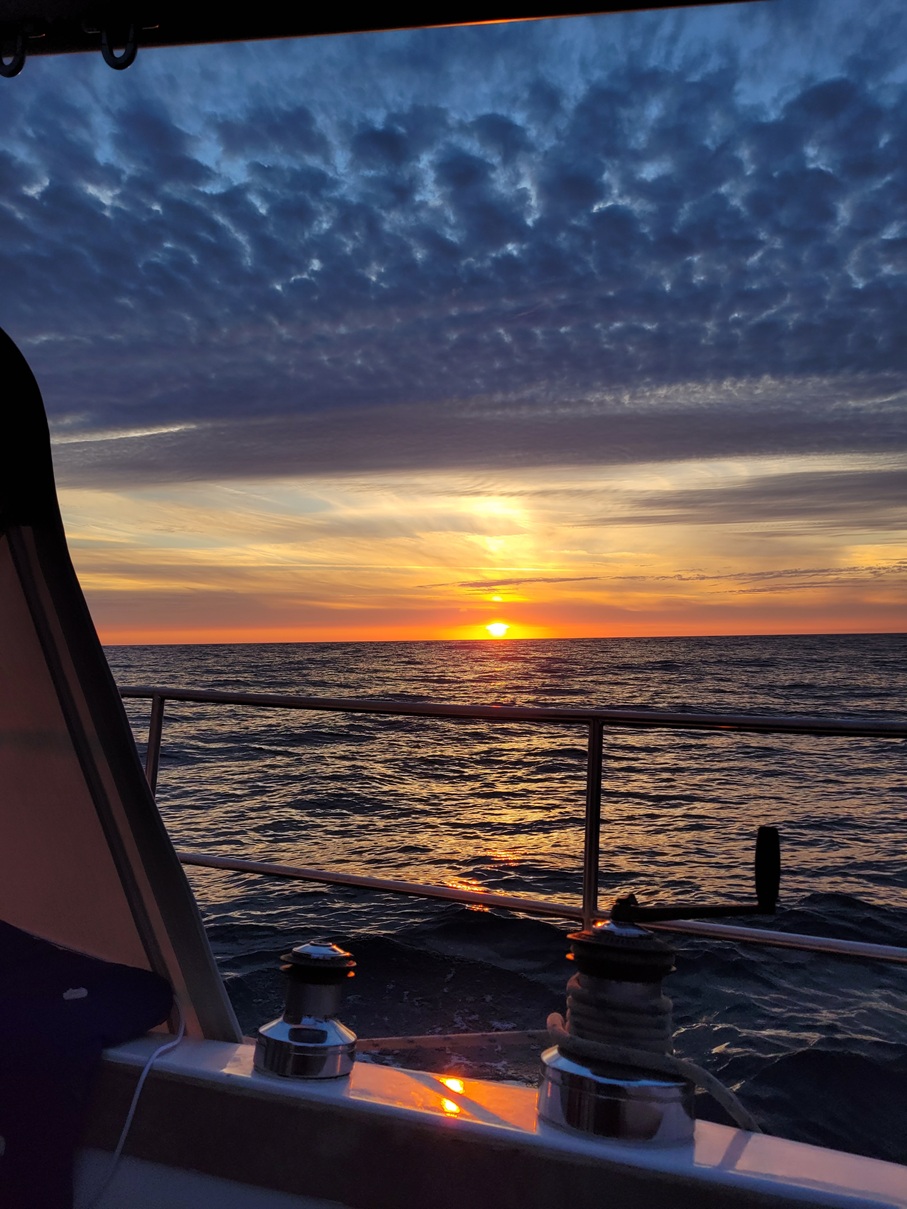
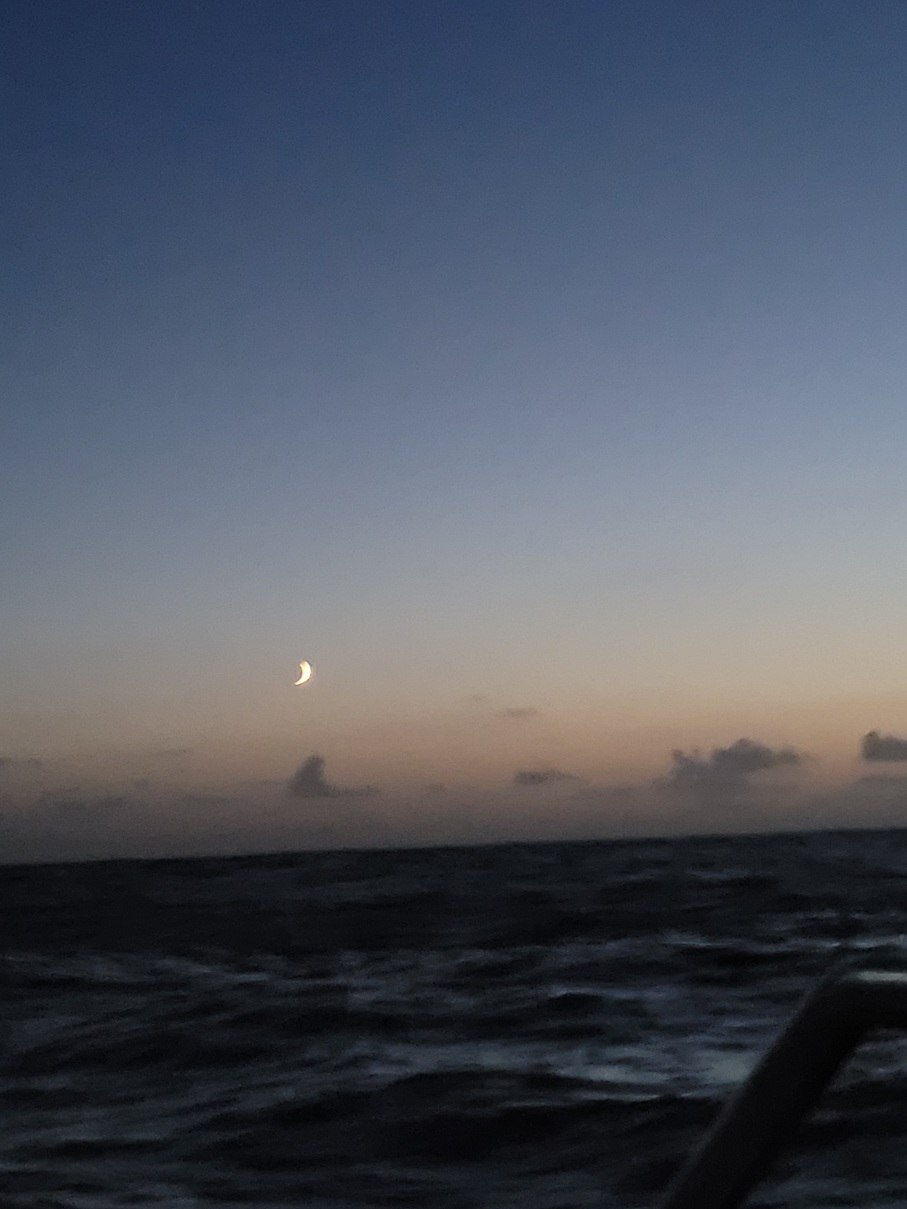
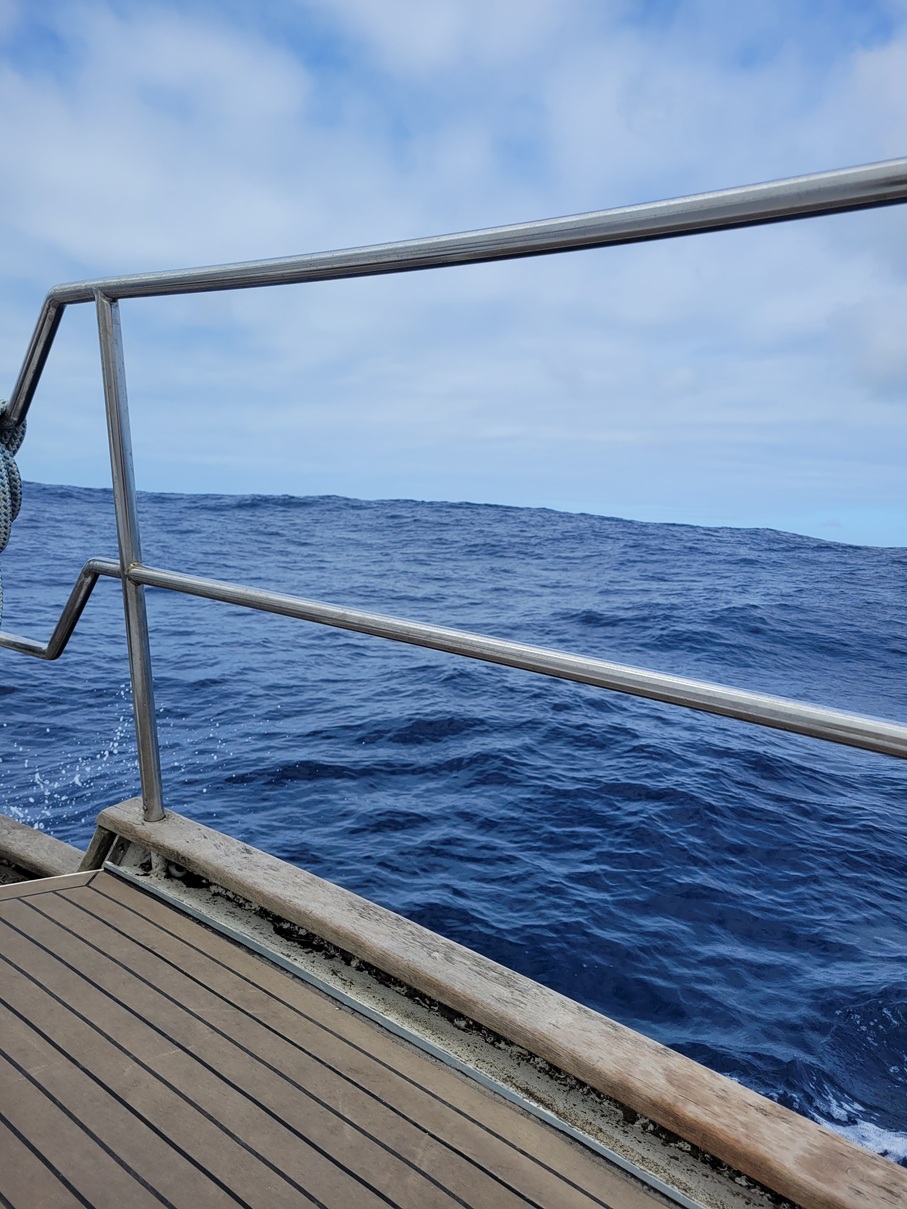
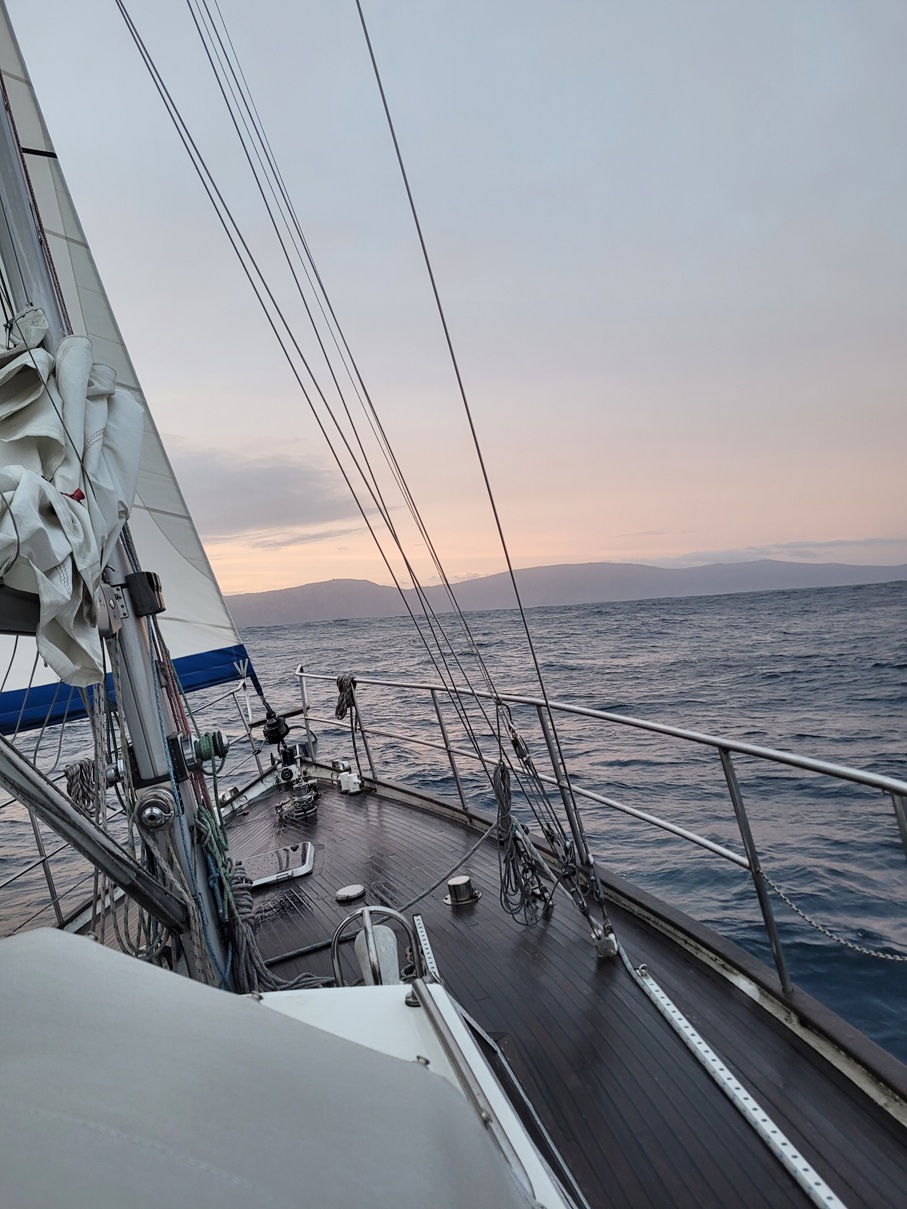
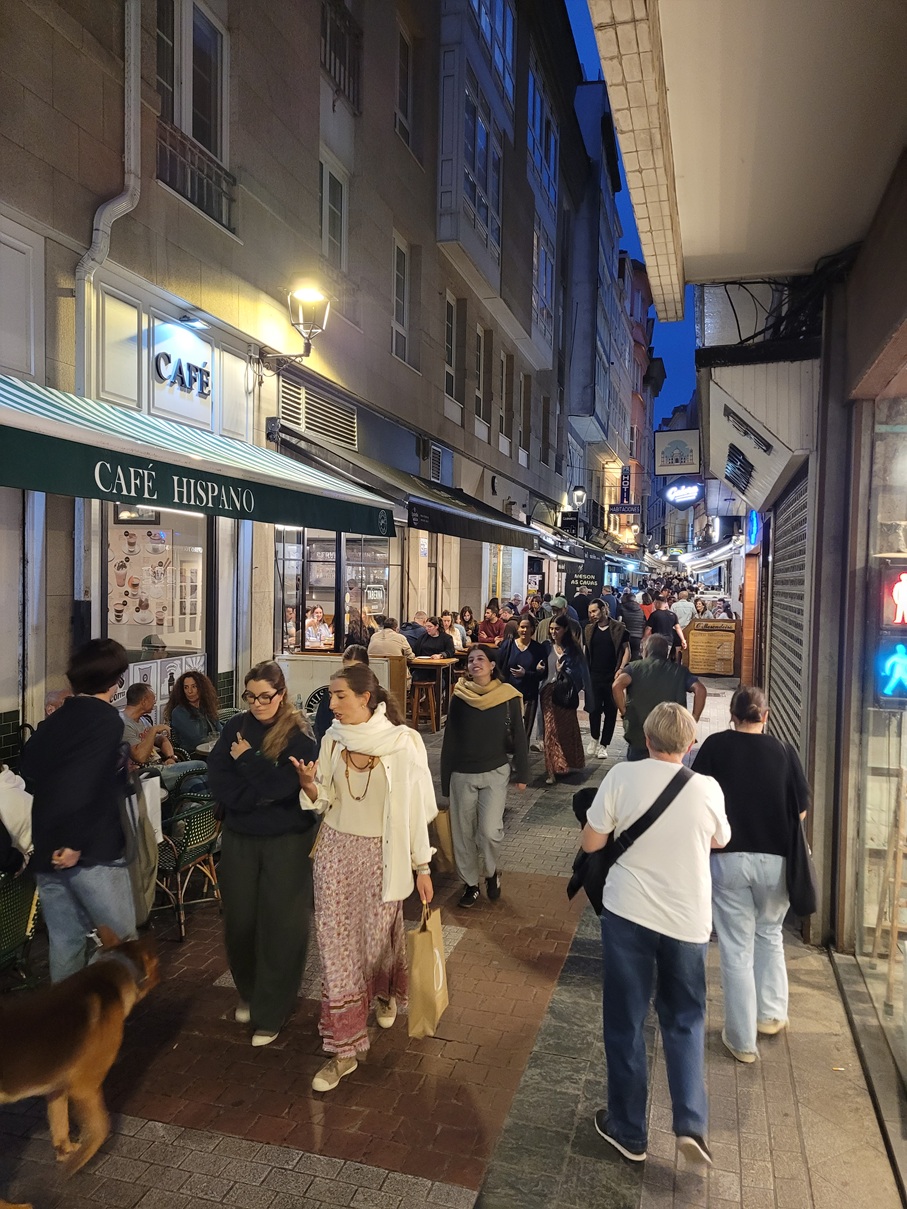
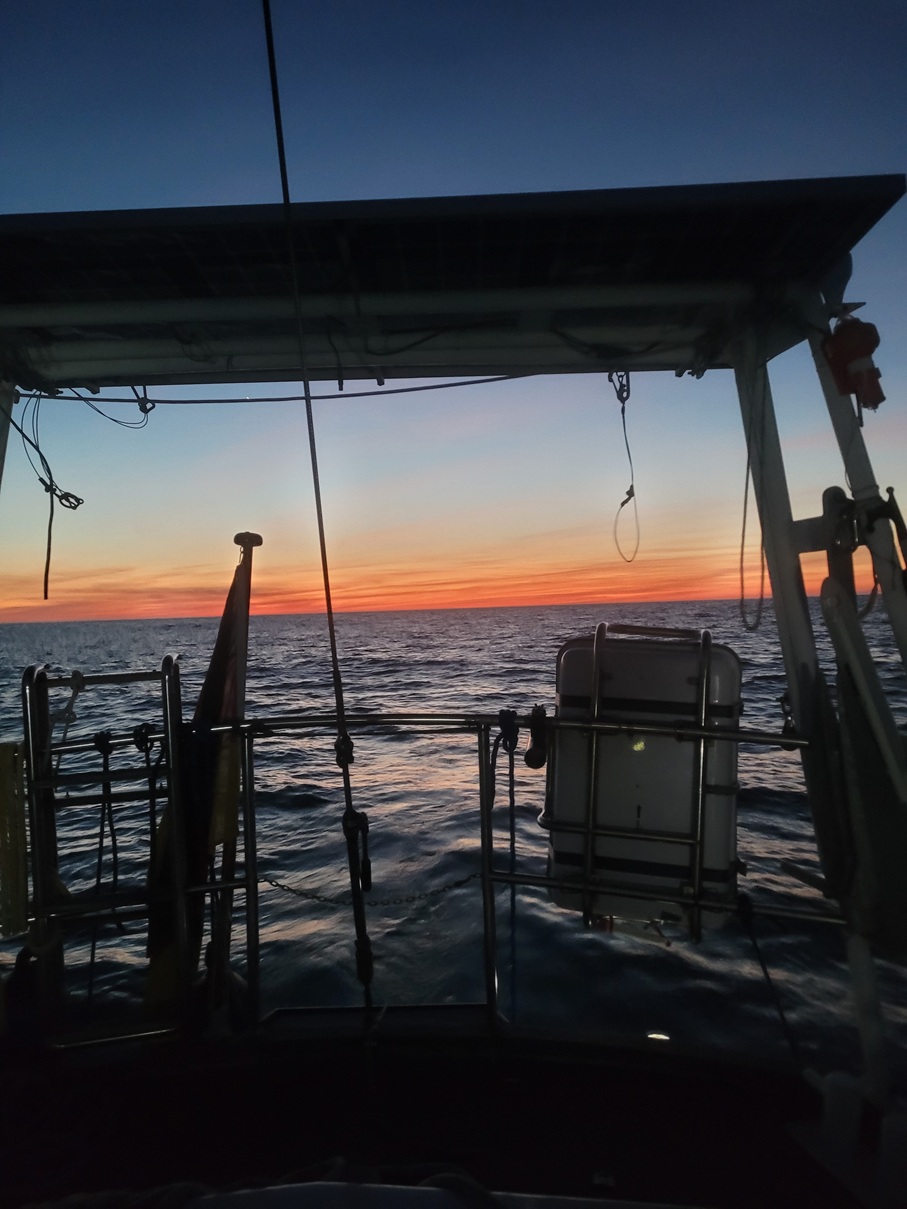
Sunsets | Into the night | High waves | Land after 4 days | A Coruna |
|
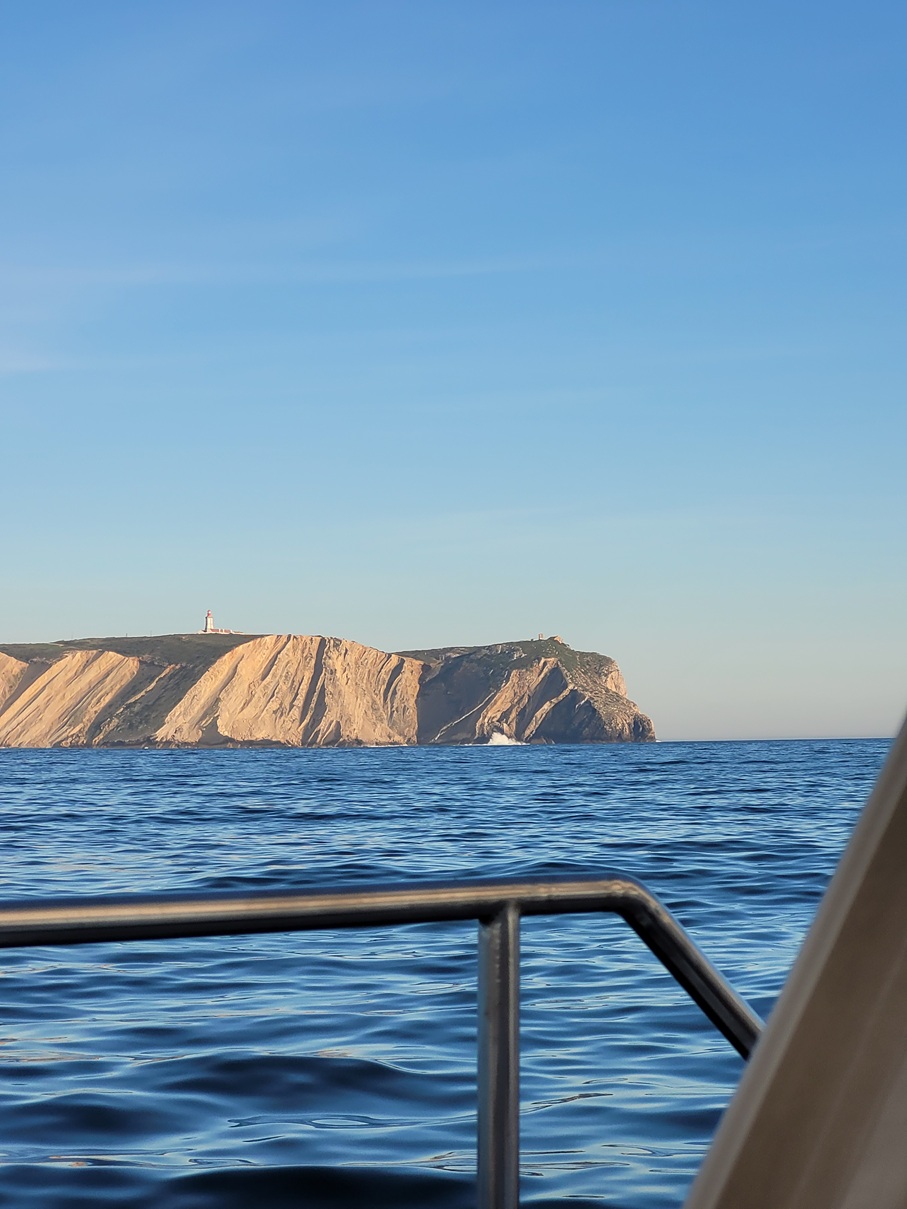
The Coast of Death is not without reason, as I discovered. It is the northwesternmost Spanish coastline, from A Coruña to Finisterre (the end of the world).
Known for its many shipwrecks and fatalities, the most famous shipwreck was probably the oil tanker "Prestige" on November 13, 2002, one of the largest oil spills in Europe to date.
The ship broke apart on November 19, 2002, and 64,000 tons of heavy fuel oil contaminated 2,900 km of the French and Spanish coastline, especially along the Costa da Morta.
I made a mistake. After Andrea flew home, I absolutely wanted to continue on Monday. When I got out, there was still a 5-meter swell from the previous storms.
I thought it would definitely get better, but I should have turned back and waited another day, because it was getting worse and worse. The wind was now increasing and coming from the front.
To cut a long story short, it was the worst trip of the entire crossing, as I had to tack, which meant I had to cover twice the distance.
Night fell, and the wind gusted to over 35 knots, the waves grew ever higher, and then the shallows off Camarinas Bay appeared, in the form of protruding rocky outcrops,
which, of course, I couldn't see at night. When I finally entered the bay, there was also a channel I had to be careful of; I was headed for Muxia.
Then, finally in the marina, the entrance was poorly lit, and I had to dock alone in 25 knots. The first time didn't work, and my dear Aaris got a few more scratches.
The second time, it went well, and I was secure and so relieved, like rarely in my life. I needed a day to recover and enjoyed the Galician cuisine and good Spanish beer in Muxia. The Muxia Marina was actually paid for as compensation by the shipping company responsible for the Prestige accident and is quite modern with floating docks. Unfortunately, partly due to the orca attacks, there are few boats here, and it's quite inexpensive. This is why some Germans are also permanent residents. Muxia is located directly on the Way of St. James, so many pilgrims are also on the move. The next day, the next challenge arose: I had to pass the orcas in the Bay of Arousa. Two days ago, there were attacks on sailboats here. The weather was now really pleasant, with about 15 knots of wind from the southwest and sunny. From Muxia, I passed Cape Finisterre and made a wide detour around the Bay of Arousa, where I absolutely wanted to anchor, then past Vigo, where there were orca attacks a week ago. Then night fell, and I arrived in Portugal. |
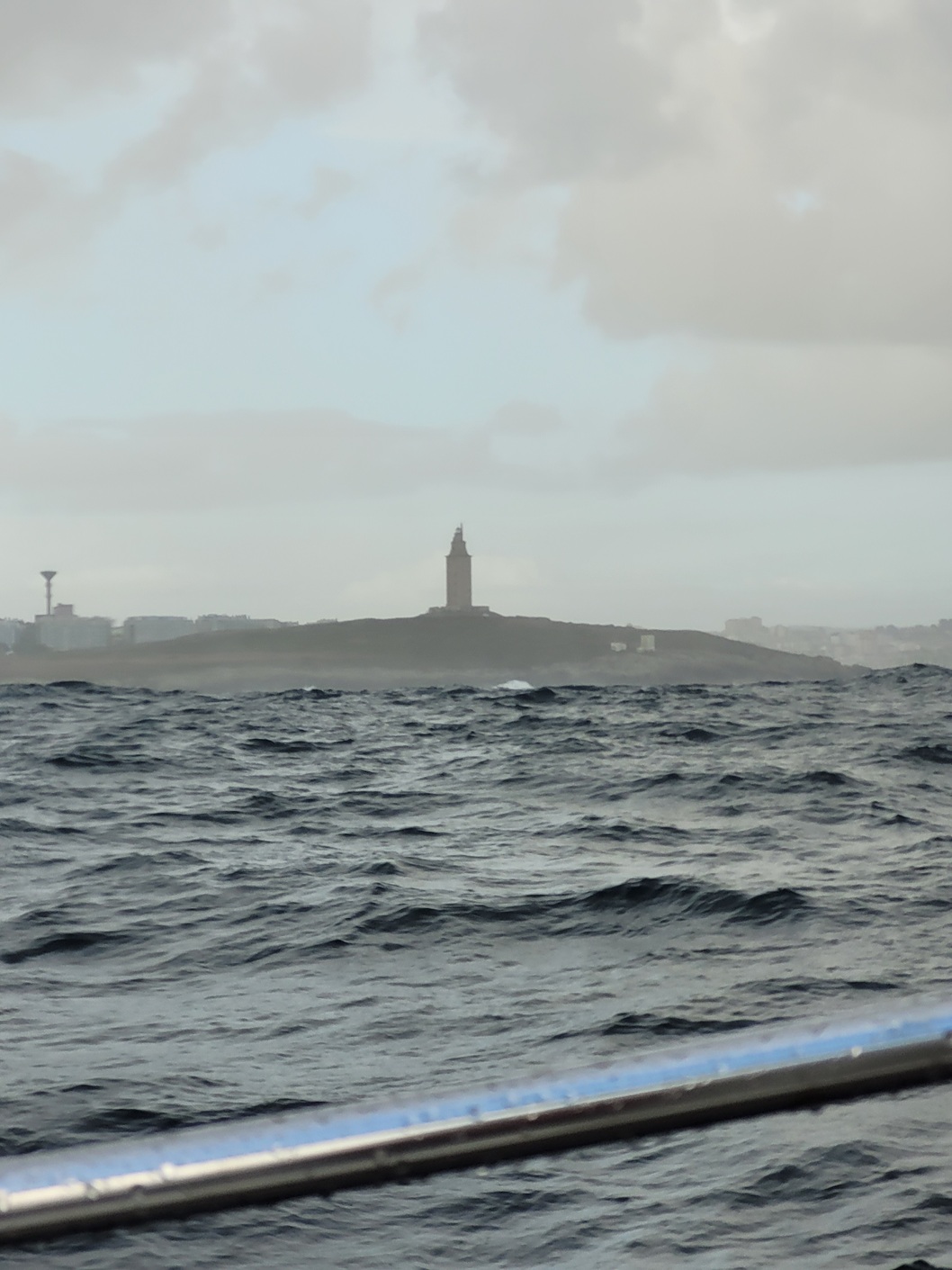
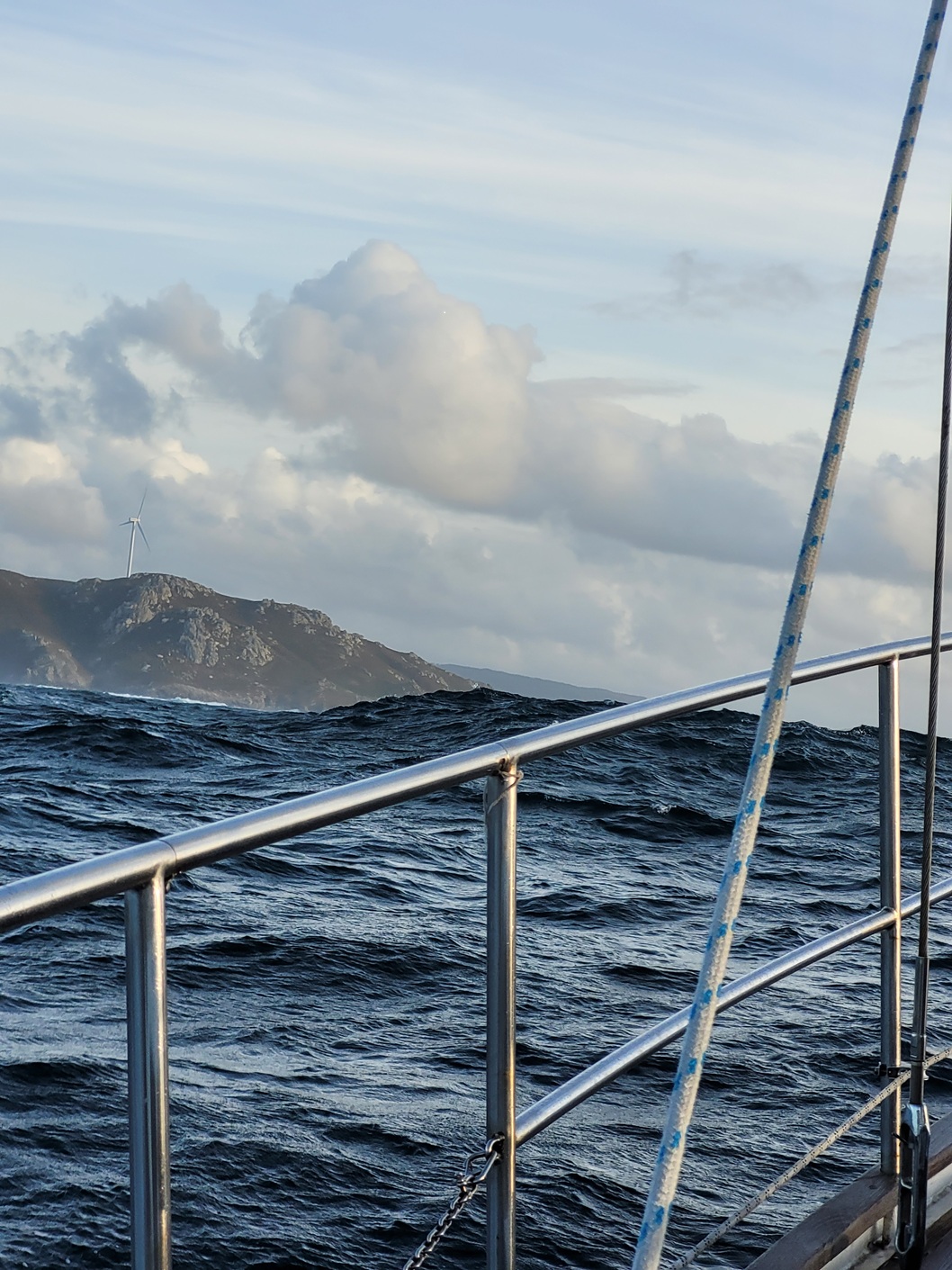
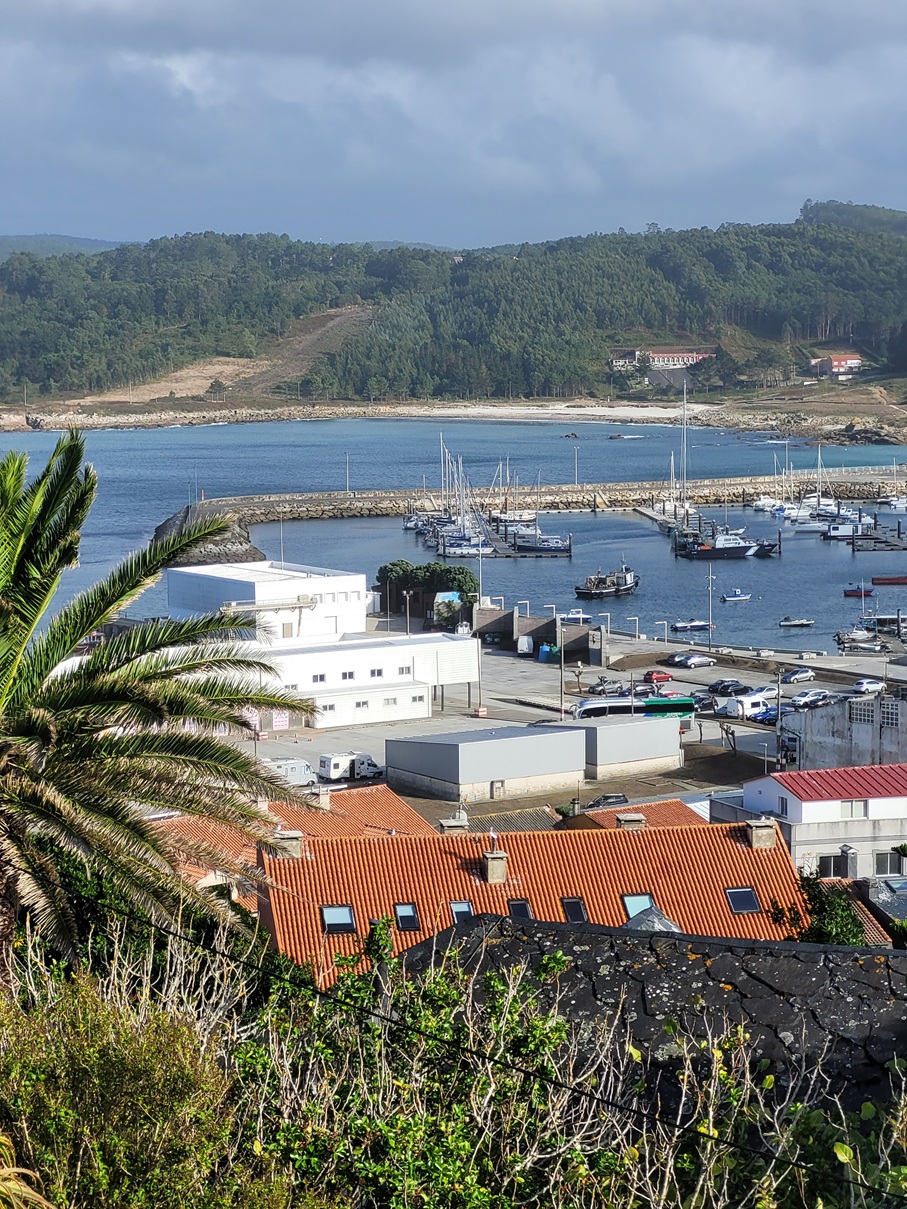
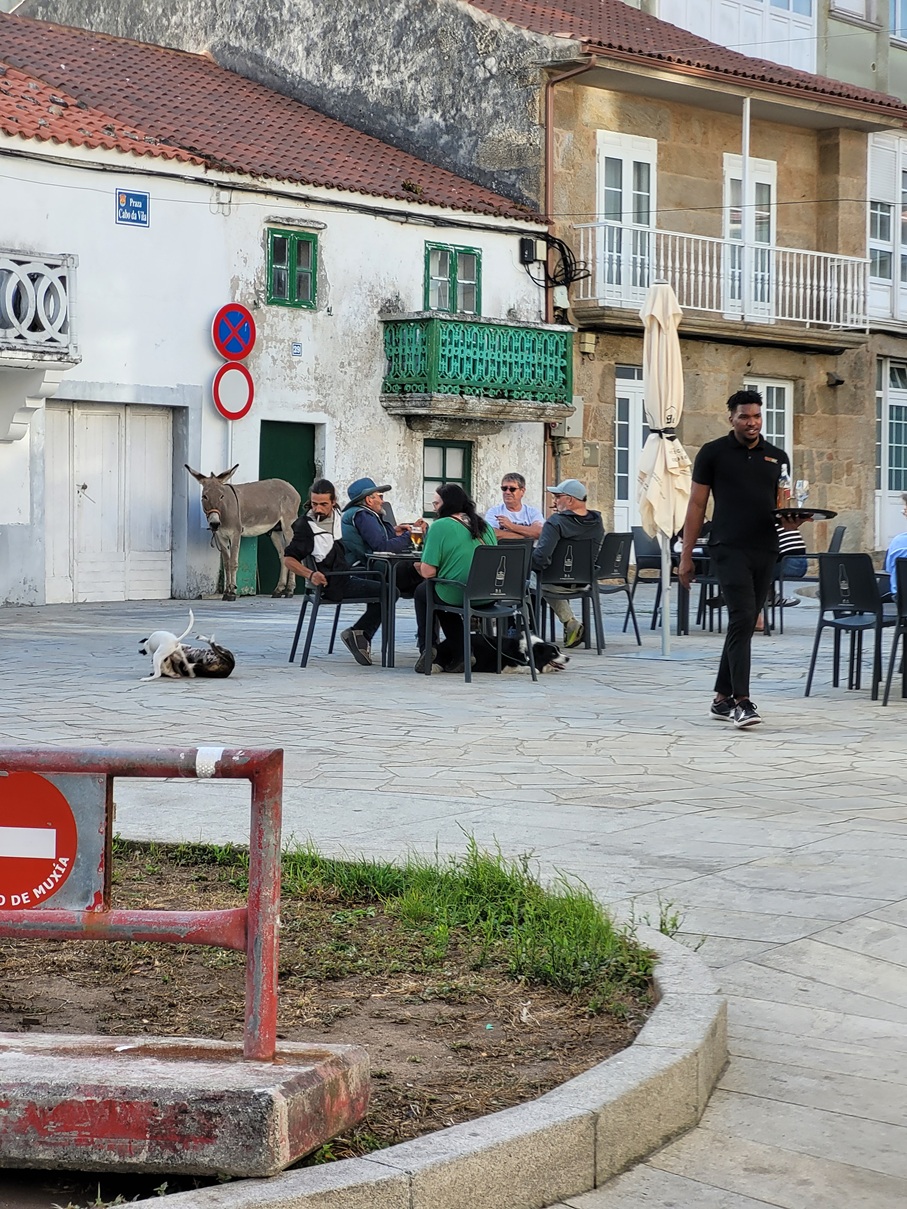
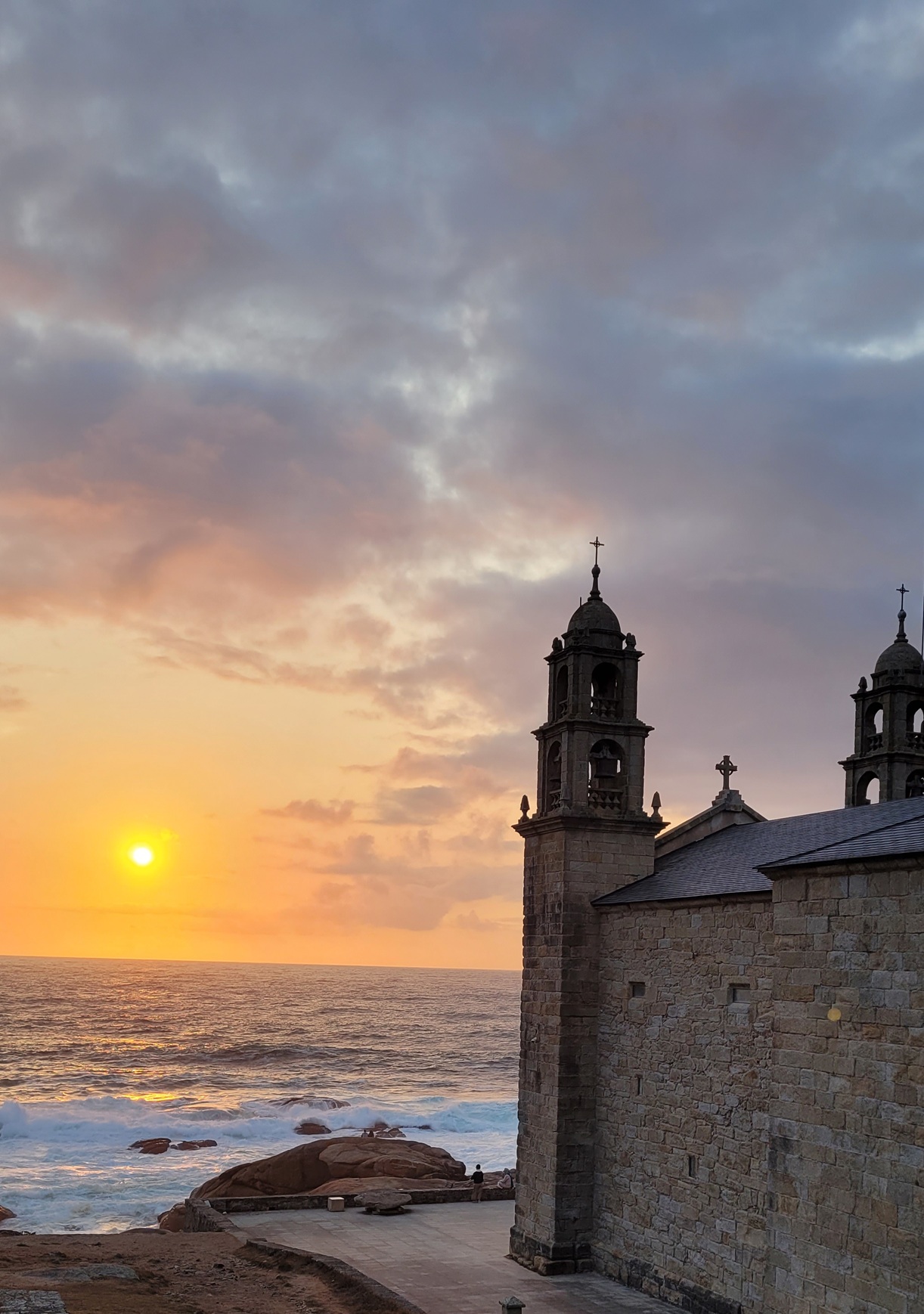
A Coruna | Cabo de San Andrian | Muxia from above | Beer with locals | Pilgrimage site |
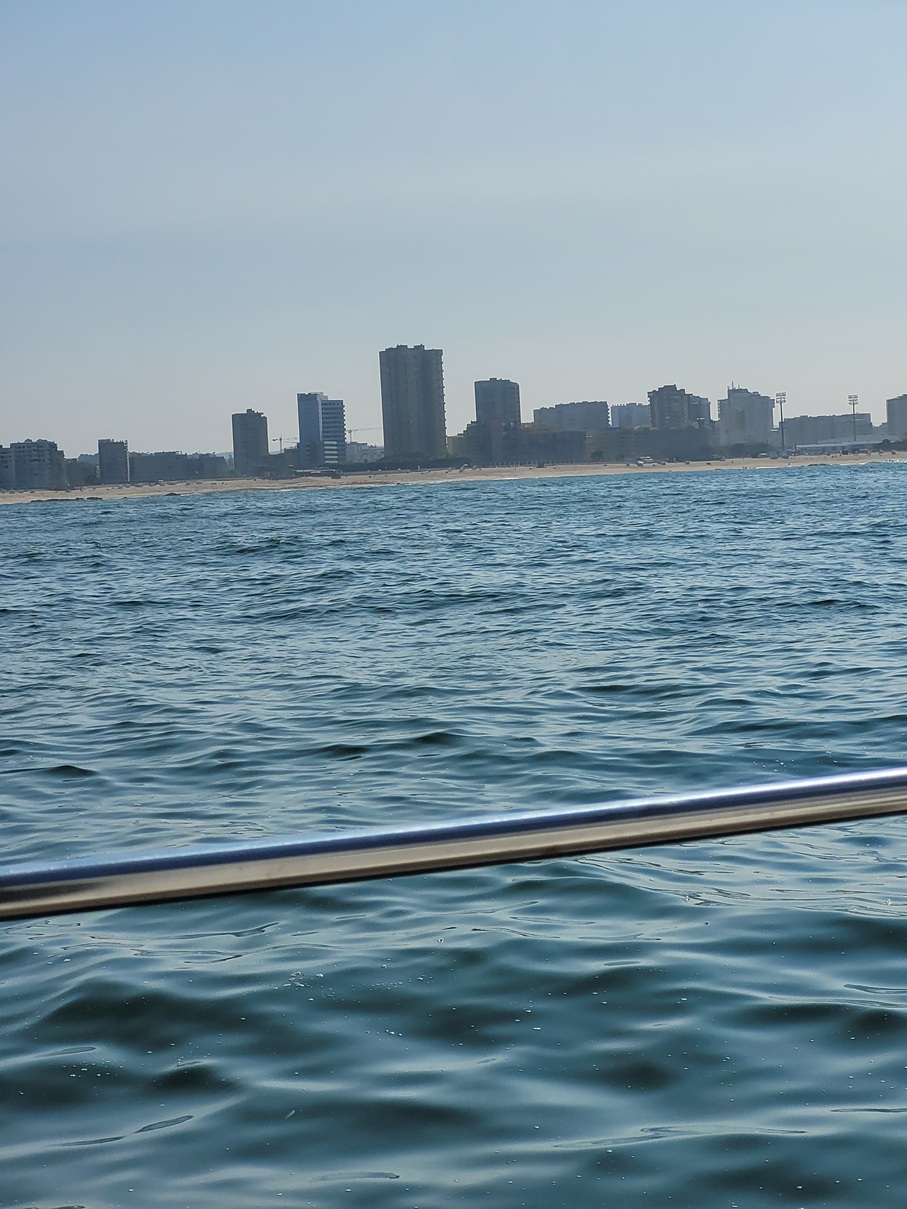
| From Vigo, I sailed close to land, following the advice on how to behave around killer whales, and tried to navigate on the 20-40m depth line. It was the first night trip where I learned how to do this when you're tired. You scan the horizon for traffic, then you check the radar and the AIS. If you can't see any traffic, there are no ships for about 15 nautical miles, then you set an alarm for 30 minutes, because no ship can get too close during that time. I can basically fall asleep right away. Then you do the same thing over and over again all night long. As dusk fell and the sun slowly rose, I was in Viana do Castelo, Portugal. From then on, I had to watch out for the fishing nets—there are a lot of them here—and I had to slalom around all the way to Póvoa de Varzim. As I sailed past the harbor, I thought I was no longer in Europe. The fishing port looked very run-down, as did the fishing boats. The houses have seen better days. The marina, however, was modern. What really impressed me, however, was the calm friendliness and helpfulness of the people. For example, when I needed a few things, a dockworker drove me all over town to where I could buy them and also gave me a free city tour. |
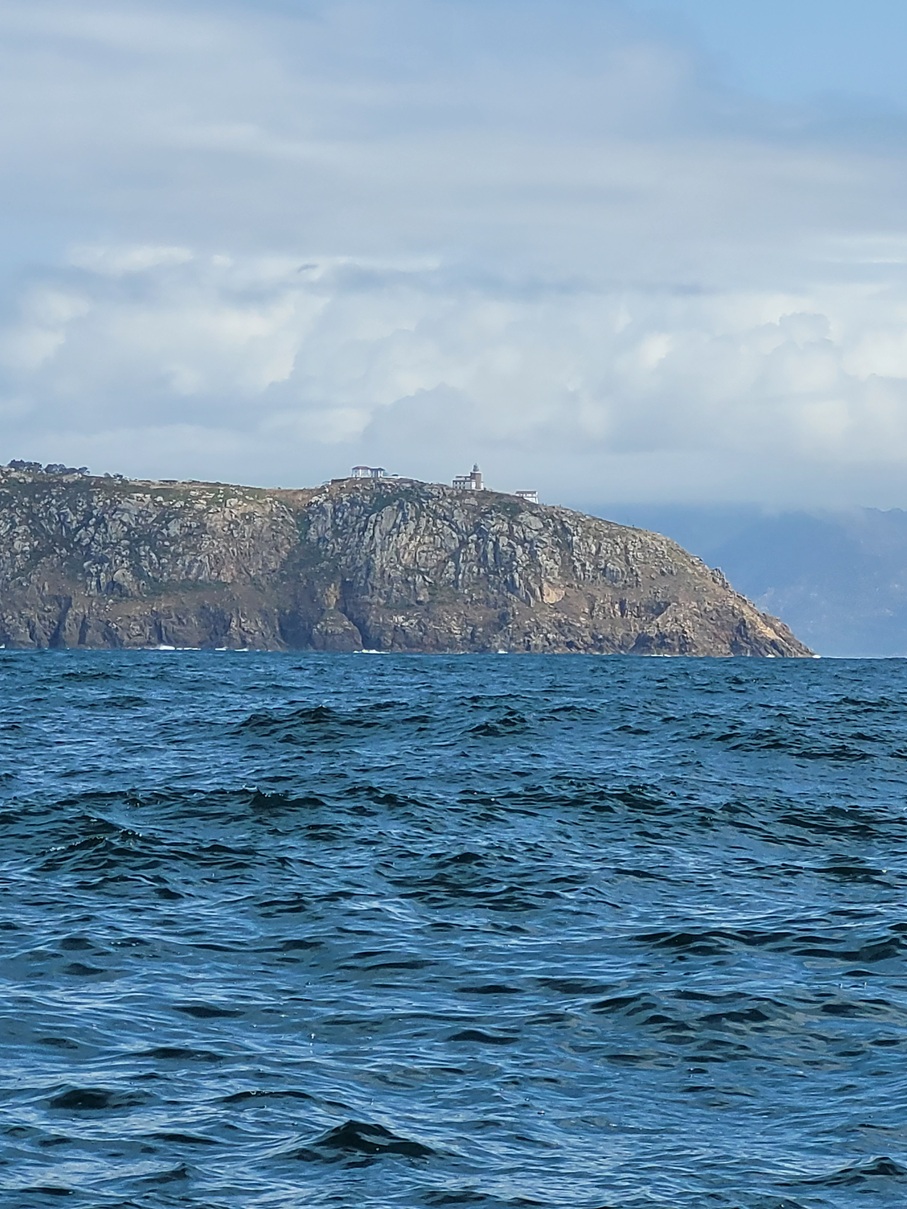
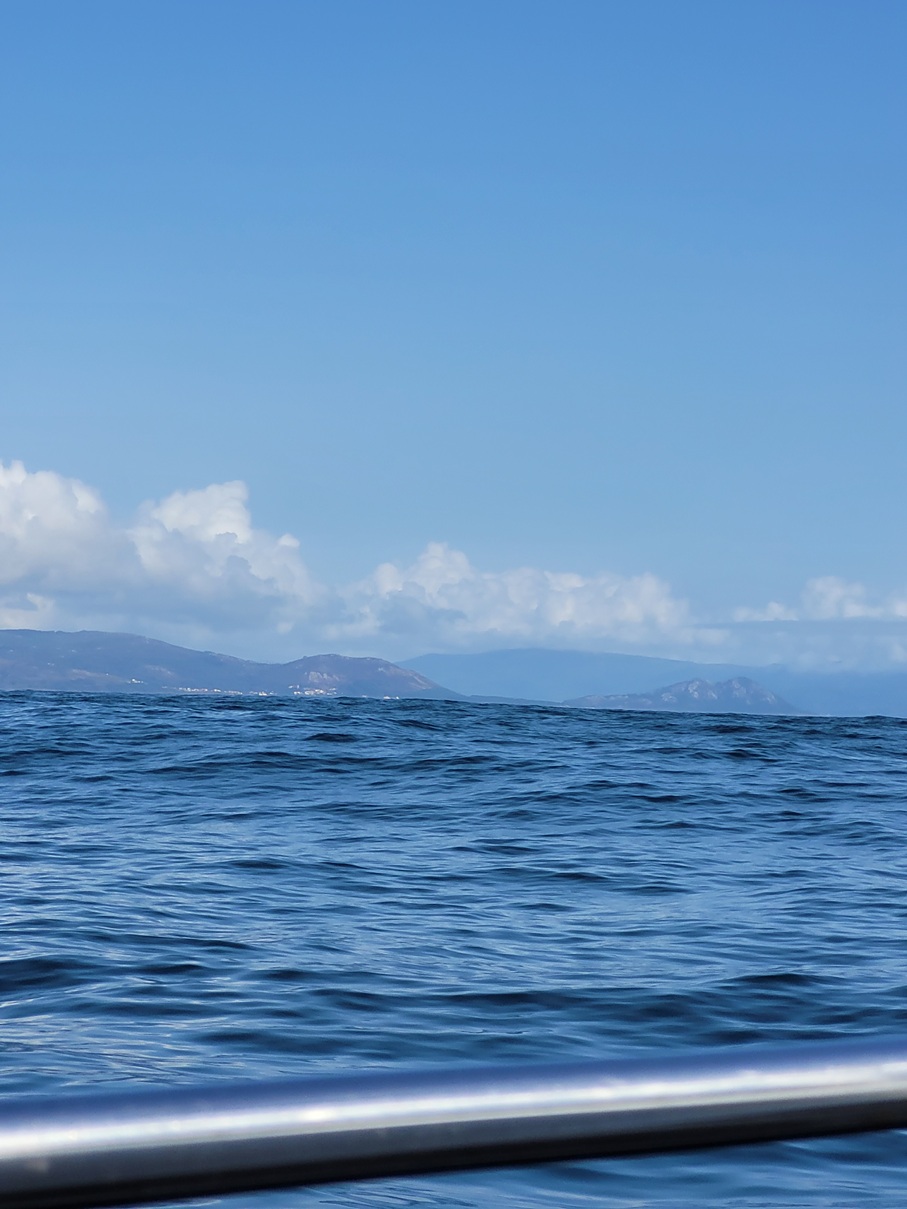
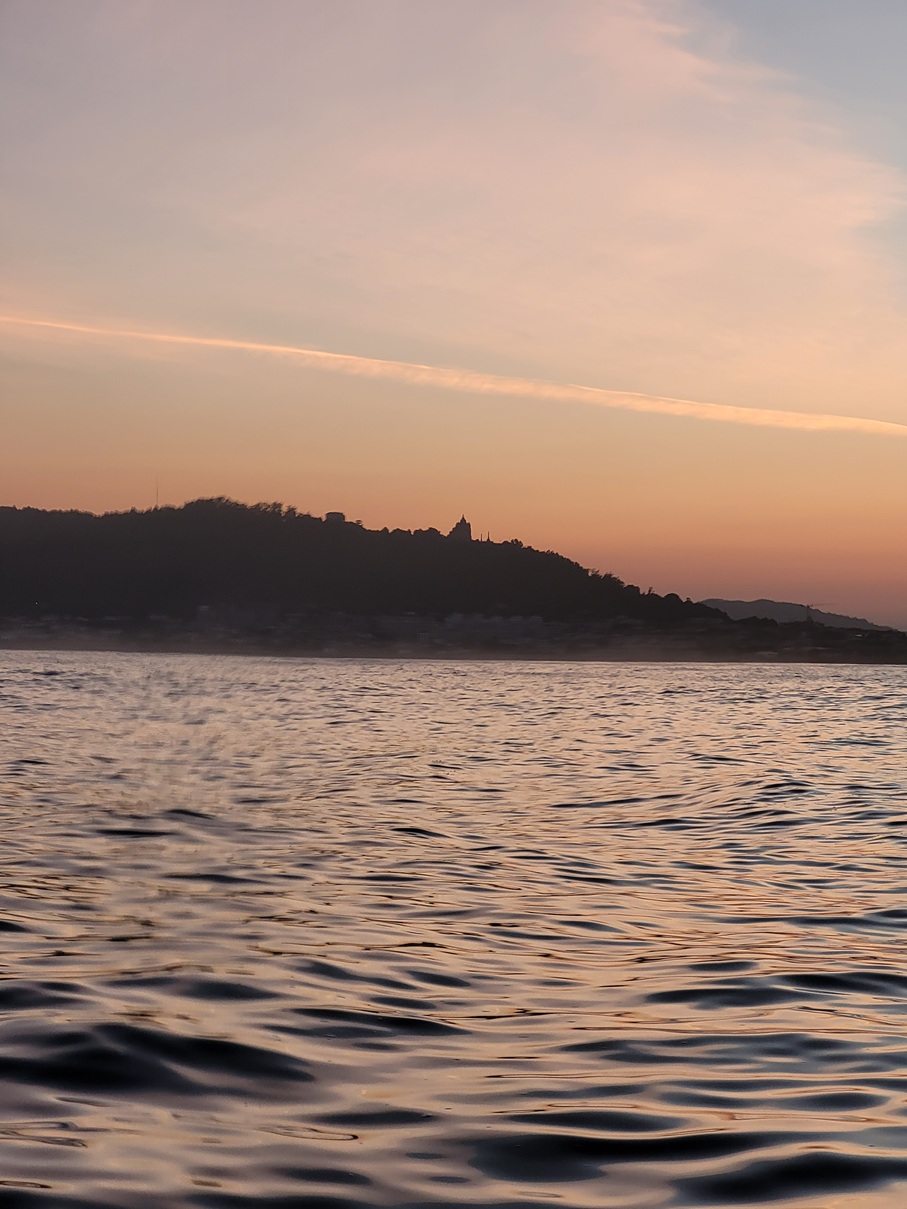

Cap Finisterre | Ria Arousa | Viana do Castelo | Directions to Povoa | Póvoa de Varzim |
|
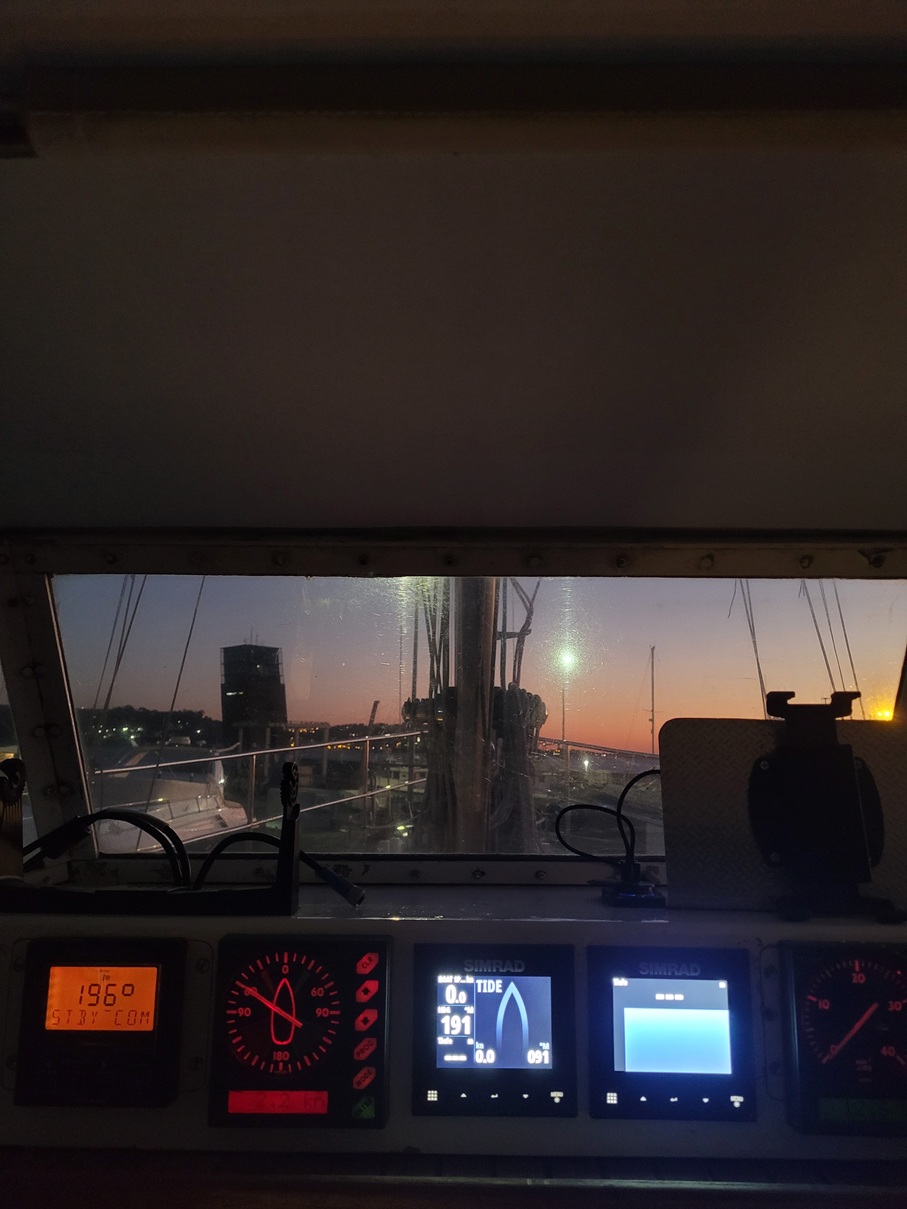
From Póvoa I sailed to Porto to refuel, then sailed to Aveiro to an anchorage behind the small airport. The next morning I planned to set off for Lisbon. I expected a day, a night, and another day. It was really beautiful sailing into the night.
Then another beautiful night sail. That night there was a full moon, which made it easier, and there was a blood moon. Part of the moon was obscured by the Earth, creating a red corner.
I was slowly getting into the swing of things at night and was able to sail really well. I was out for a whole day and a whole night and by dawn I was almost at Lisbon, faster than expected.
Because the tide off Lisbon hadn't even gone out yet, I was cruising a bit slower. Then I started the engine and noticed something was wrong with the gearshift; I couldn't engage reverse.
I radioed the nearest marina in Oeiras about my predicament, saying that I couldn't stop, or brake, in the harbor. I was afraid that things might go wrong.
Here I was once again able to experience this Portuguese helpfulness. As I slowly entered the harbor, there were at least six people standing at the dock to help me stop the Aaris with the lines,
which actually worked really well; I was very relieved. My Polish neighbor asked what was wrong, and I explained to him that the control system wasn't working properly. He immediately recognized the problem and disassembled and repaired it within half an hour – amazing.
Now, as I looked over the bow and saw the lovely restaurants under the palm trees, I had the feeling that my journey was coming to an end after more than five weeks.
I asked the friendly marina staff for an address where I could leave the Aaris over the winter: the Centro Nautico Algés, a shipyard 5 nautical miles away, which also offered me a good deal.
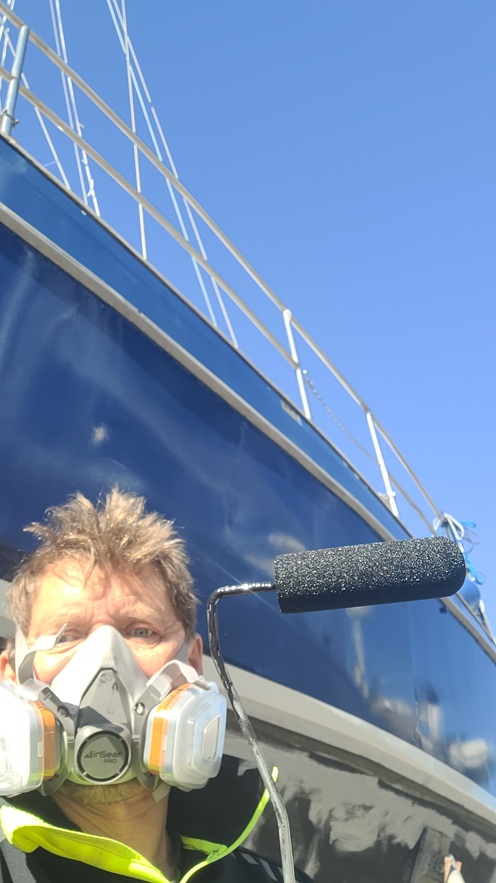
I decided to relax a bit for the last few days and then take the Aaris to the shipyard. In the Oeiras Marina, the Ocean View was one pier behind me. After I brought the Aaris into the boatyard, the next day the Ocean View sailed a different course, just about 2-3 nautical miles from the one I had taken into the boatyard. She was attacked by orcas and actually sunk. This was reported all over the media. There are about 4-5 boats in the boatyard with orca damage, right next to me is an aluminum boat about 45 feet long. At the boatyard, I'm having a new depth sounder installed and installing a higher-quality GPS so I can project a radar overlay onto the map. The boatyard guys say I should be through Gibraltar by mid-April, as the orcas aren't active yet. The orcas usually don't start until the end of April, when the tuna also arrive. I'm happy to take the locals' advice, and that's what I'll do. |
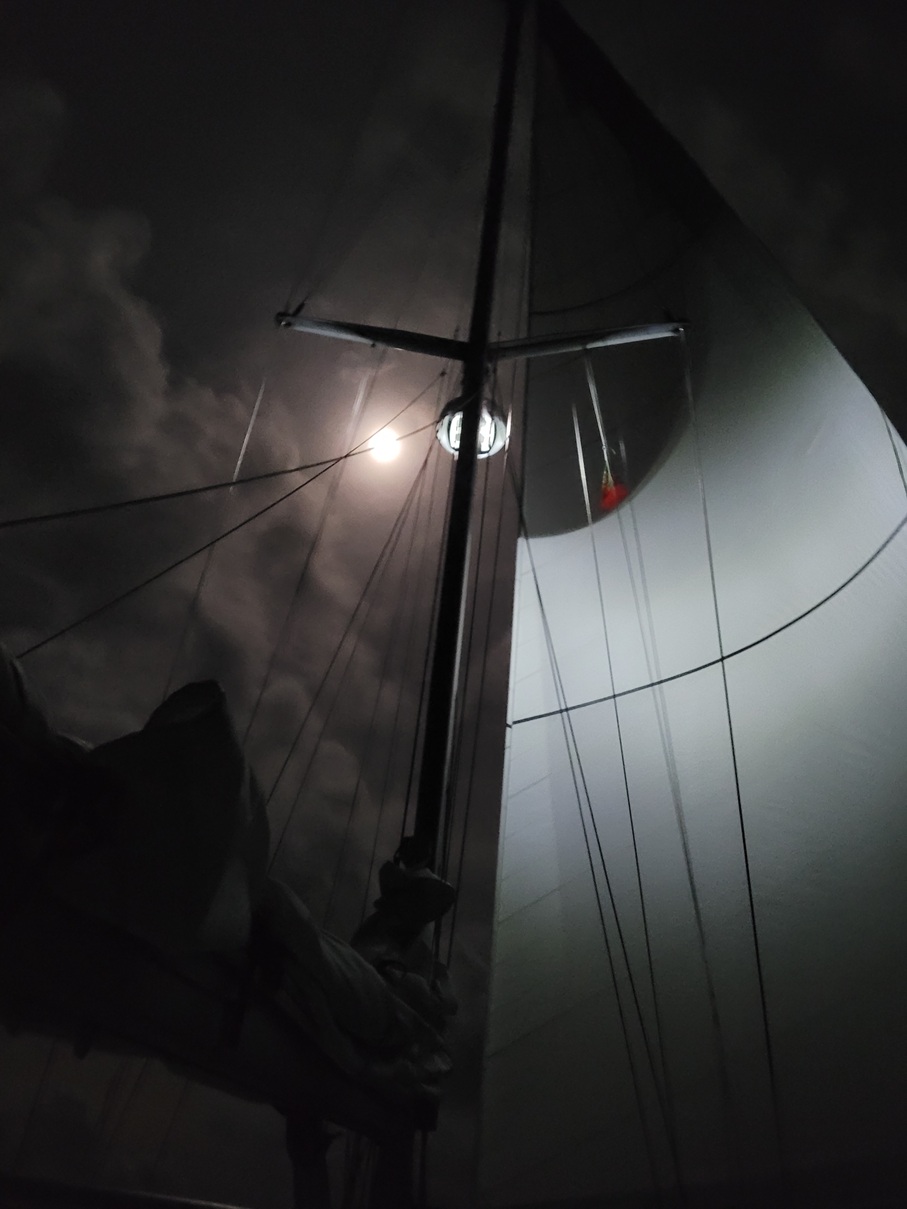
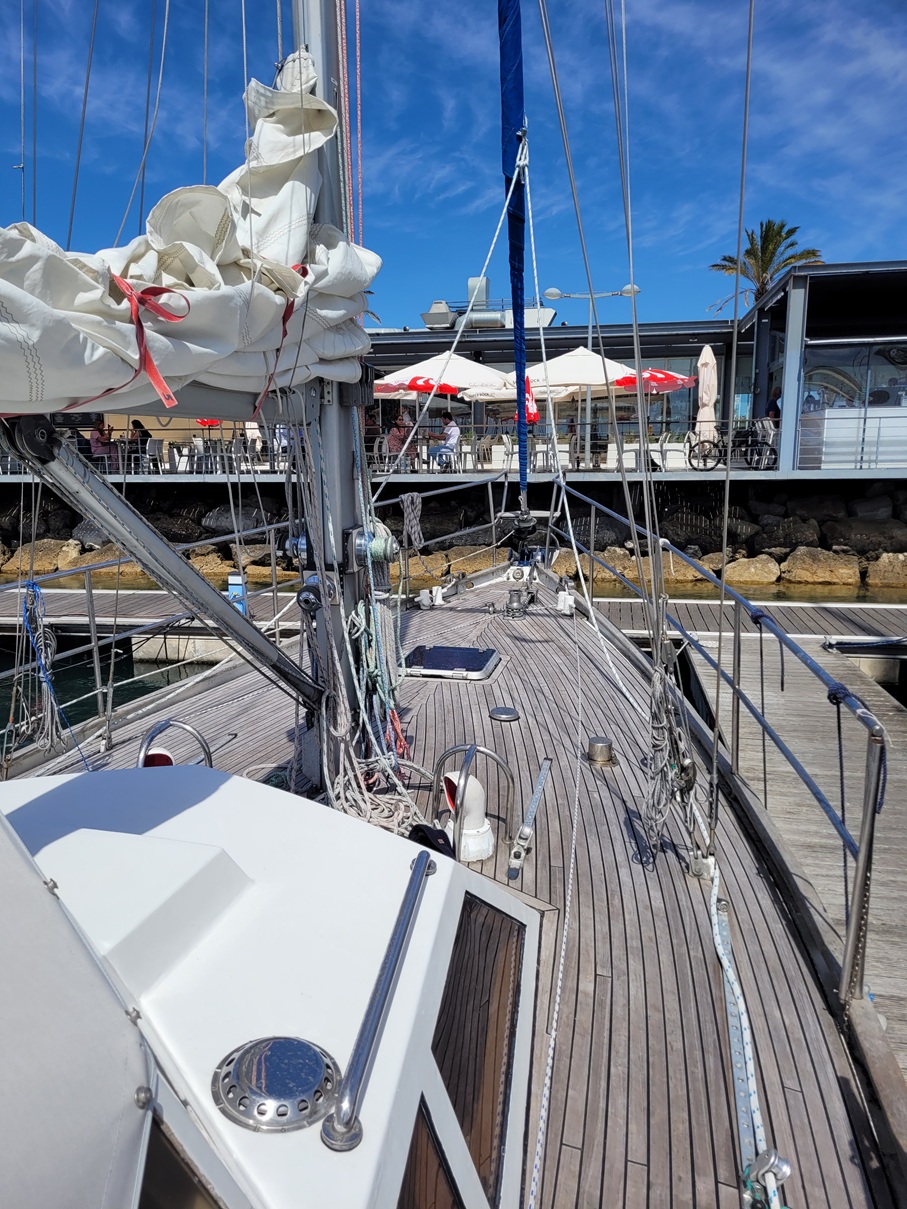
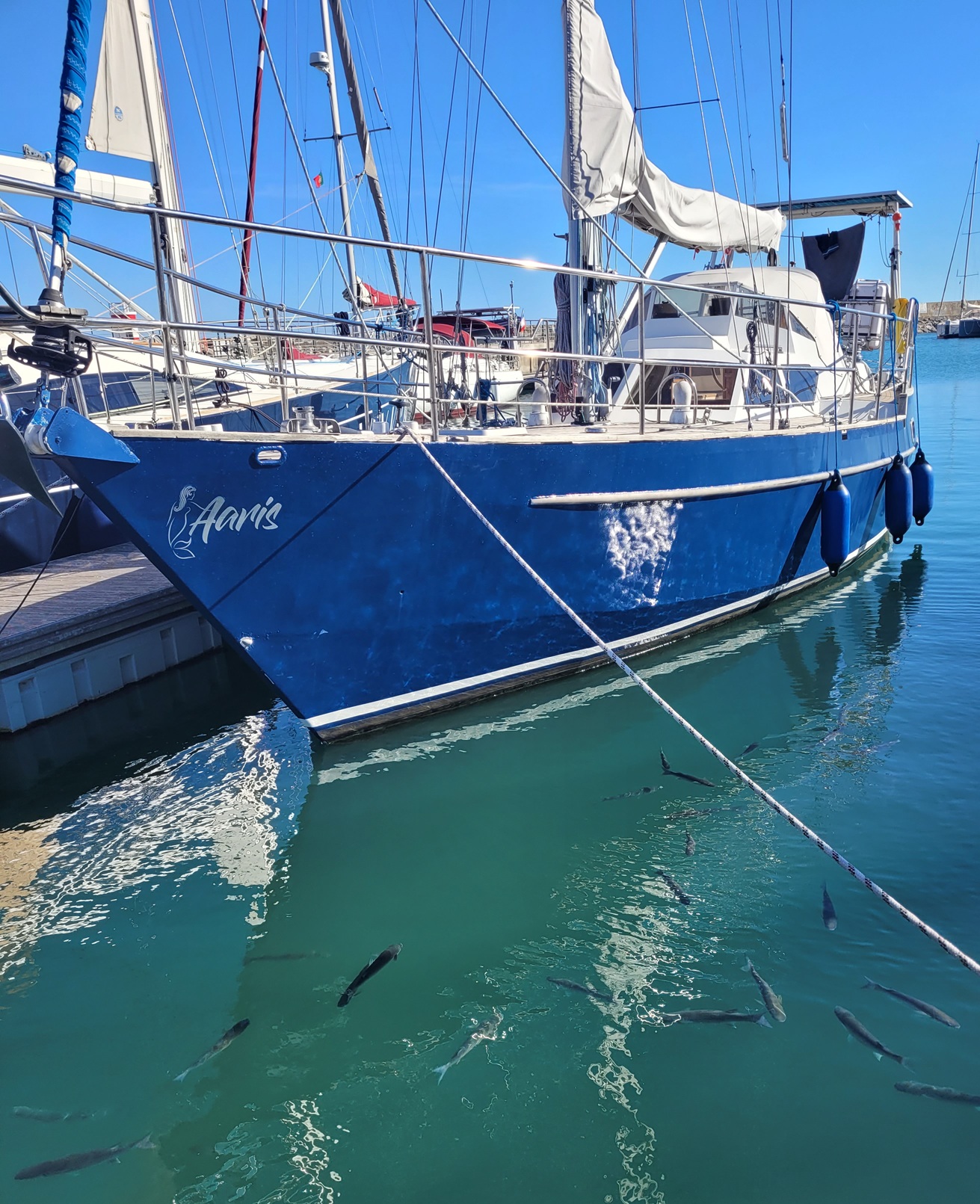
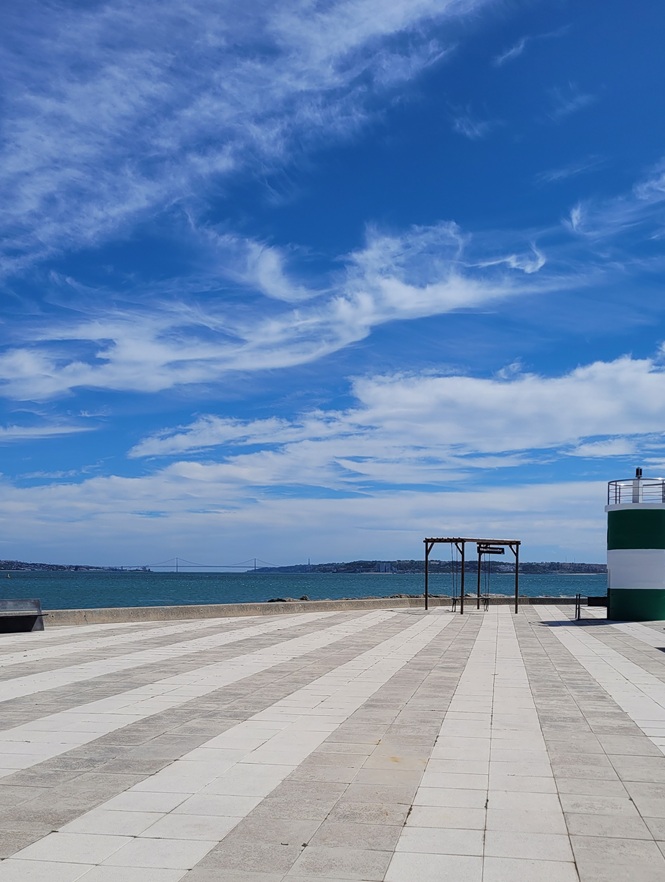
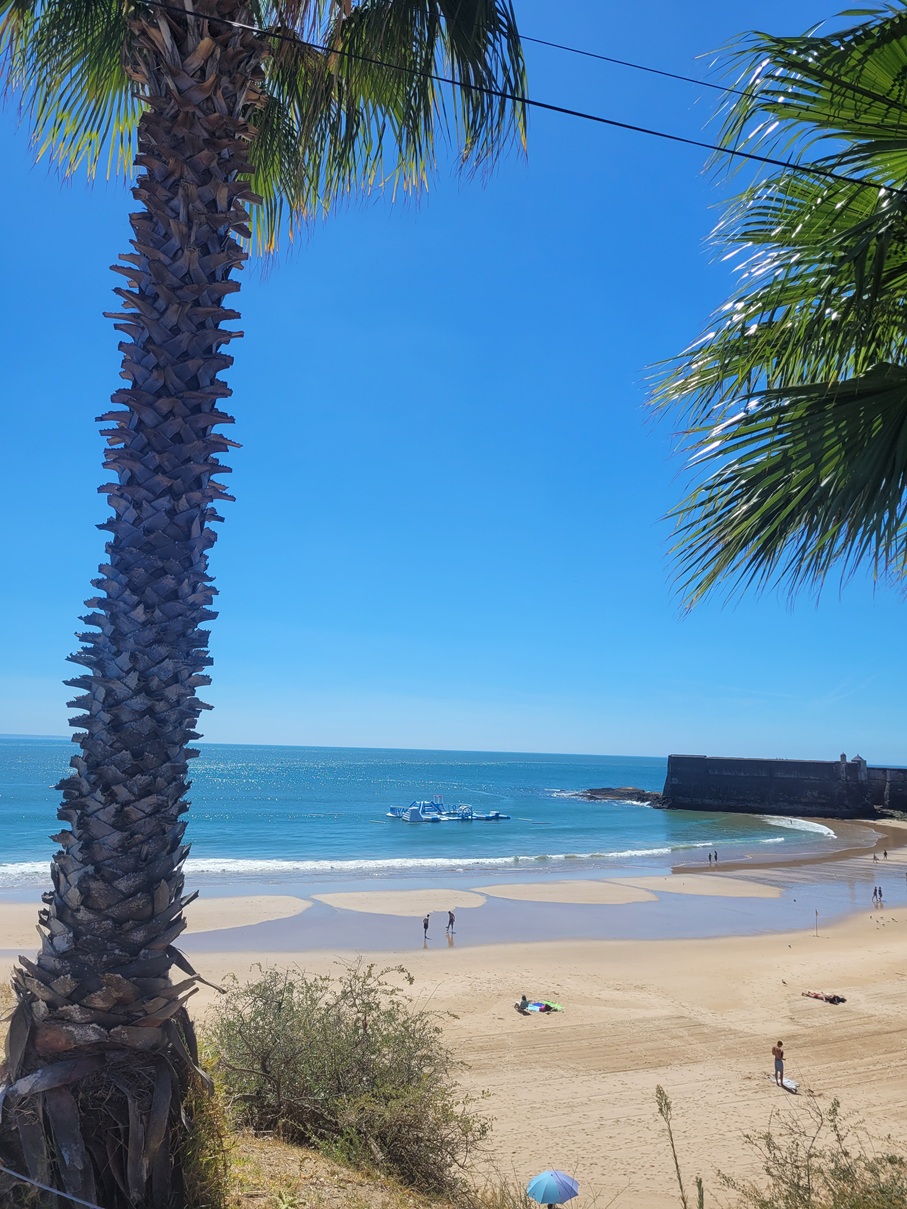
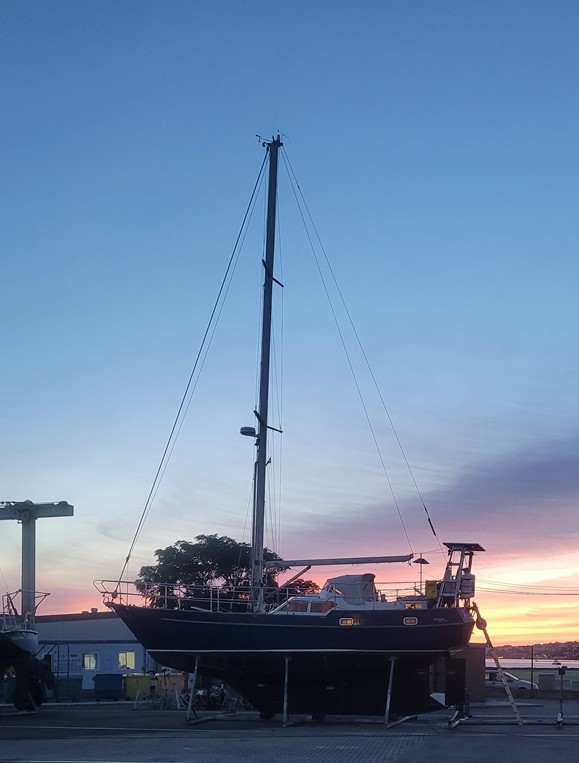
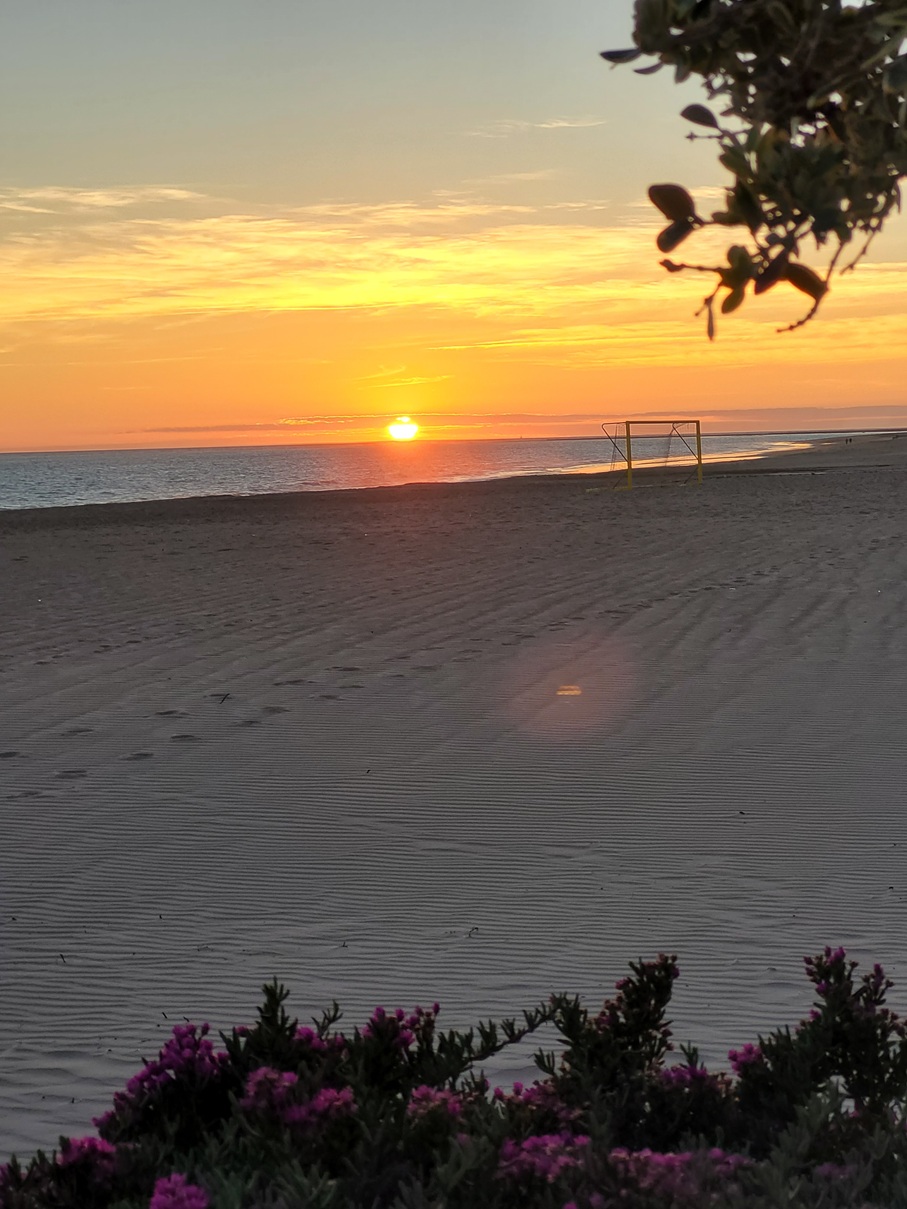
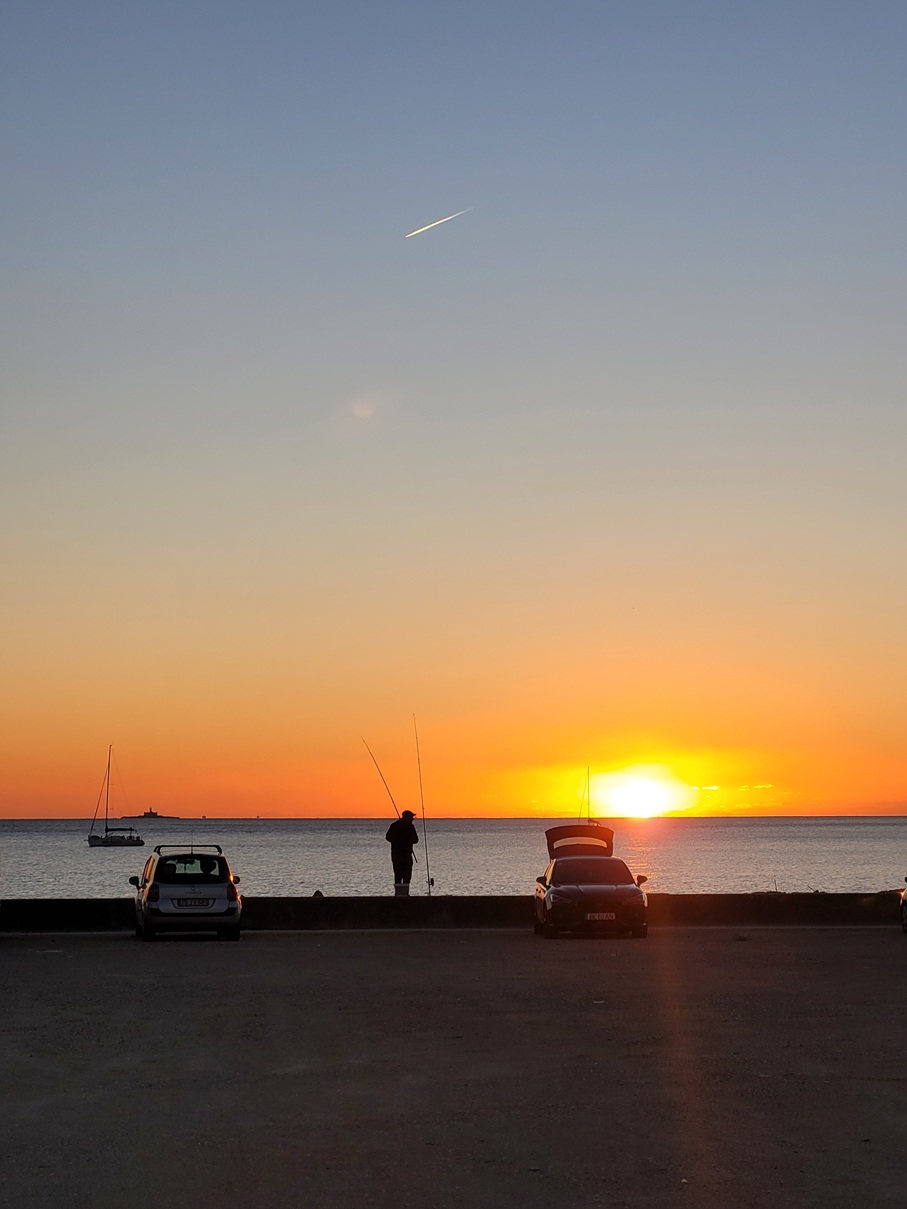
Sailing in the night to Lisbon | Arrival in Oeiras | My berth in front of the pub | View of Lisbon | Beach next to the marina | Winter storage 25/26 |
|
Home l
Position l
Log Book l
Weather l
SAR l
Impressum l
|
|
Copyright 2025 Winny.de. All Rights Reserved. |